Landscape Lighting · Murfreesboro, TN
Landscape lighting for Murfreesboro's new and historic homes
Light TN, a Burns design studio, lights both the new estates and the established streets of Murfreesboro and Rutherford County.

Landscape Lighting · Murfreesboro, TN
Light TN, a Burns design studio, lights both the new estates and the established streets of Murfreesboro and Rutherford County.

Landscape Lighting in Murfreesboro, TN
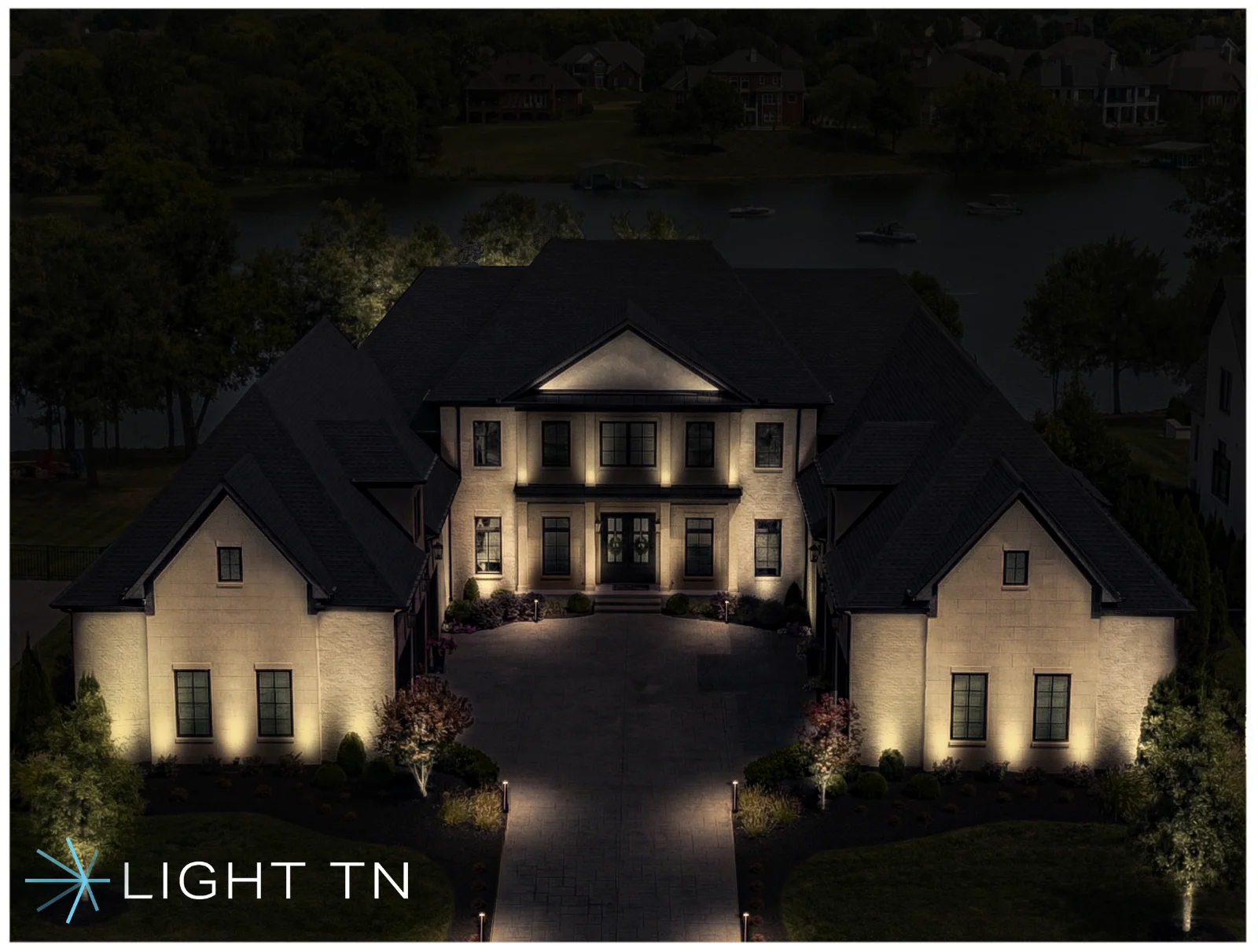
Murfreesboro pulls in two directions. Out toward Indian Hills and Shelton Square, the estates are new and the landscape is young — saplings, fresh beds, a lot still finding its shape. Closer to the 1859 courthouse and the Public Square, the homes are older and the trees have had a century to grow. Landscape lighting has to read both, and Light TN is a landscape lighting designer based in Burns that designs for the property in front of it, not a formula.
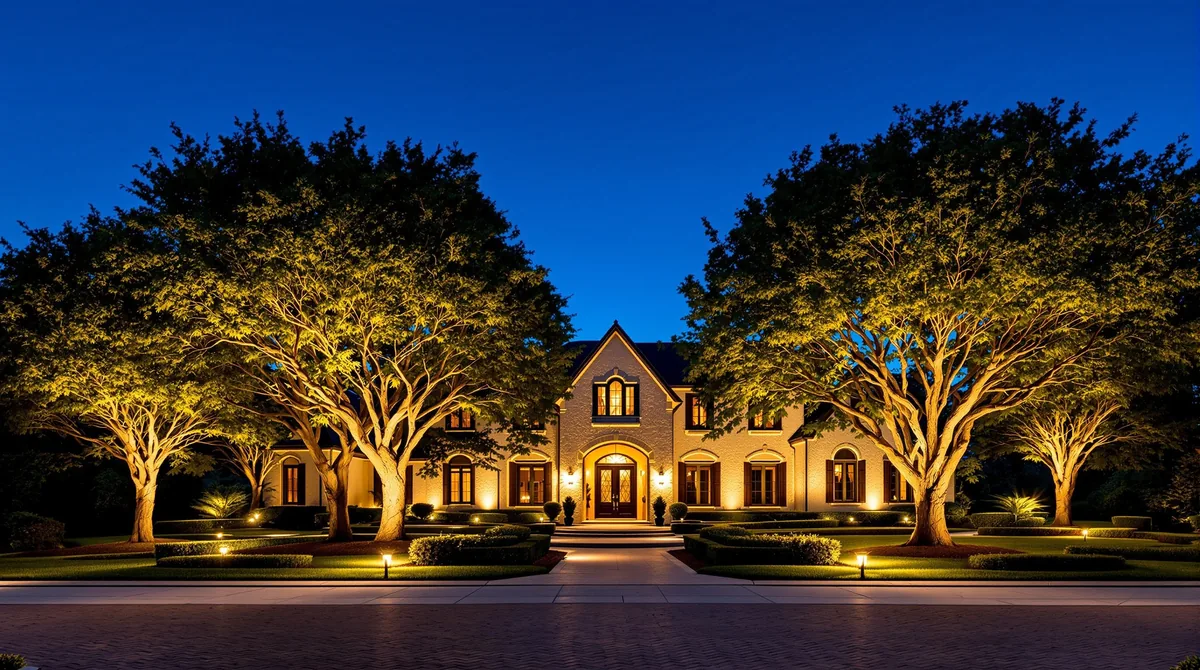
A young landscape is a moving target. We light a new Murfreesboro estate for how it looks the night we leave and for how it will look once the trees fill the gaps — fixtures and zones placed so the design still holds at five years, not just at planting. You should not have to re-light the yard every time the garden grows up.
What Murfreesboro Landscapes Ask For
Out in Indian Hills and Shelton Square, the landscape is still filling in. We light a young Murfreesboro lot for the trees it has and the trees it will have, choosing fixture positions and beam spreads a sapling can grow into rather than outgrow, so the design ages with the garden instead of against it.
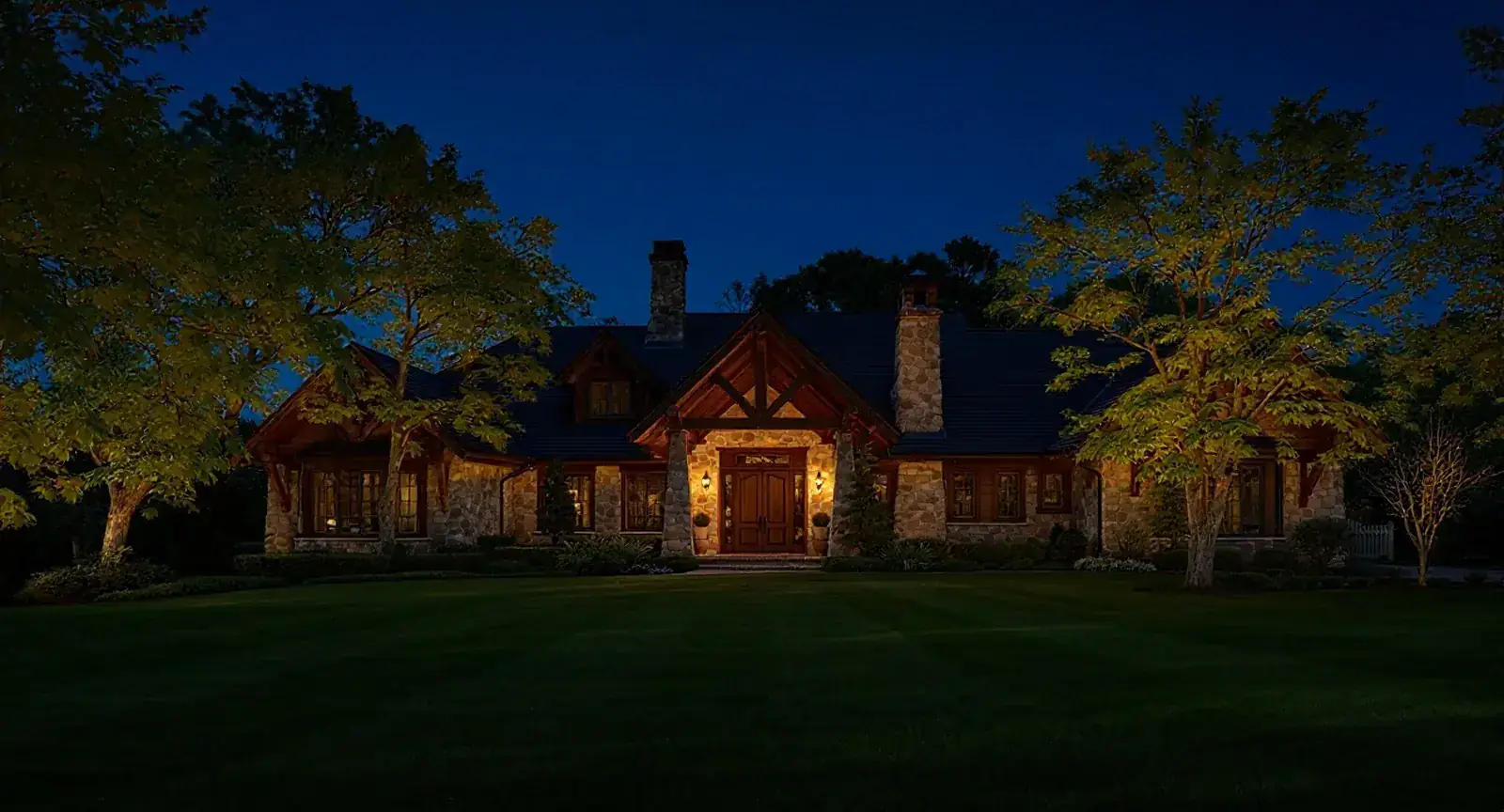
The streets around the 1859 courthouse carry homes and canopy well over a century old. There the work is the opposite of new construction — warm, low, shielded light that complements brick and stone the way it was meant to be seen, with nothing that reads modern or bright against an old facade.
Murfreesboro estates tend to sit on open, generous lots with real road frontage, and that frontage is part of the design. We light it from set-back, shielded positions and keep path lights below eye level from the street, so the approach reads composed from the curb and the source itself never shows.
Why Murfreesboro, TN Trusts Light TN
Daryl Bentfield designs every Murfreesboro project himself and is on site with the crew — the designer who walks your property is the one who aims the lights after dark, on a new build in Shelton Square or an older home near the Square alike. Light TN holds a 4.9-star rating across 62 Google reviews, installs to licensed contractor CE-D: 76580 standards, and backs the work with manufacturer lifetime fixture warranties, a one-year workmanship warranty, and an annual fixture failure rate under 1%.

Murfreesboro Areas We Light
FAQ
The cost depends on the areas included, the specified fixtures and the work needed to connect them. Light TN’s published cost guide prices a design after an on-site assessment rather than from a fixed rate card. On this Murfreesboro page, an open-frontage property, a young garden and an established lot near the Square represent different design tasks. Ask the proposal to identify the arrival, paths, trees and other areas included, along with the transformer and cable routes. The consultation is free, and you review a rendering and scope before proceeding. That gives you a defined system to compare rather than an unsupported regional average.
Begin with the places you use, then choose a few features that give the garden depth. A large backyard does not need the same brightness across every square foot. Light TN’s ideas guide separates routes and gathering areas from accents on trees and architecture. For the open lots described on this Murfreesboro page, review the view from the property as well as the approach from the road. A distant tree can contribute to the composition without turning the entire lawn into a lit surface. Establish those priorities before deciding fixture quantities, and include the cable and power plan needed to reach the selected areas.
The answer depends on the electrical work proposed and the authority responsible for the address. Have a qualified installer establish whether the project uses an existing suitable supply or needs new electrical work, and confirm the applicable permit and licensing requirements. Rutherford County’s electrical-permit guidance explicitly distinguishes Murfreesboro City from the county’s State Electrical Program, so a county rule should not be assumed to apply within the city. For a property in the East Main Street Historic Zone, the city also directs owners to check whether proposed exterior work needs historic review. Light TN publishes contractor license CE-D: 76580; the project’s actual scope and approvals still need to be established before installation.
Choose the lighting positions from the trunk, canopy and the directions the tree will be viewed from. Kichler’s tree guide explains that a large canopy can need different beam angles, and a low branch can block a narrow beam before it reaches the intended area. On an established Murfreesboro lot, review the tree from the street and from the property before settling on the arrangement. Compare a trunk accent with light reaching the canopy, rather than making one bright source do every job. Tree-mounted equipment also needs appropriate growing room and service access. A large tree is not automatically a suitable mounting location; assess the actual tree and installation before specifying that approach.
The position depends on what you want to reveal. Light in front can show a plant’s form and texture; lighting a surface behind it can create a silhouette. Kichler’s techniques guide treats these as different effects rather than interchangeable fixture positions. In a young Murfreesboro landscape, review the view from the path and windows, then consider where the planting will grow. Keep the light source out of the intended viewing direction where practical, and leave access to adjust the fixture. Kichler’s maintenance guidance notes that growing foliage can require re-aiming or repositioning. A position that works at planting is a starting point for review, not a promise that it will never need to move.
Plan the fixture position, wire route and future access with the wall itself. Kichler’s hardscape guide describes lights under a wall cap and recommends coordinating the lighting and hardscape work before construction closes off the route. An existing wall needs its own assessment; a detail intended for a new wall does not establish that the same fixture can be inserted without altering it. On a Murfreesboro property in the East Main Street Historic Zone, ask the city whether the proposed exterior alteration requires review before work begins. For a new landscape, include the wall contractor in the lighting plan early. The design should show both the visible effect and how the equipment will remain accessible.
Size the transformer from the selected fixtures’ specified input demand, its usable capacity and the manufacturer’s installation requirements. The size of the property or the number of trees alone does not determine it. Light TN’s low-voltage guide calls for the fixture loads, transformer capacity, cable routes and future additions to be considered together. For a young Murfreesboro garden, identify what belongs in the first installation and what a later stage may add. Sterling Lighting’s guidance notes that fixture settings can change input demand and that AC loads may be specified in VA. Ask for those equipment details in the plan rather than choosing a transformer from an assumed number of identical lights.
There is no single distance that applies to every low-voltage lighting run. The cable length and gauge, connected load and fixtures’ operating range determine whether the design delivers suitable voltage. Sterling Lighting’s voltage-drop guide explains why a longer or thinner wire loses more voltage and why the equipment specifications matter. For an open Murfreesboro lot, measure the planned route to a distant tree or frontage, not just the straight-line distance across the lawn. The installer may need a different cable arrangement or power location after checking the design. Ask for the route and test results to be documented; a larger transformer label alone does not resolve the cable-run calculation.
Common mistakes include lighting everything equally, choosing positions without checking the view and leaving a bright source facing the approach or a window. Light TN’s ideas guide uses selected accents and layers to give the property depth. On an older Murfreesboro home, review the light against the actual brick or stone and existing exterior lights rather than assuming more output will reveal more character. On an open frontage, check the view from the road as well as from inside the property. For work in the East Main Street Historic Zone, confirm whether the proposed exterior changes require city review. A restrained design is an aesthetic approach, not evidence of historic approval.
Blocked beams, shifted fixtures, damaged cable and control or connection faults can all change how a system performs. Kichler’s troubleshooting guide starts by distinguishing a single affected light from an area or whole-system problem and asking about recent work on the property. In a young Murfreesboro garden, note new planting, mulching or irrigation changes; on an established lot, note foliage covering a previously clear beam. Keep the fixture layout and cable records so the installer can investigate the actual cause. Re-aiming may solve a changed view, while a dim or dark circuit needs diagnosis. The symptom alone does not establish a quick repair, a fixed charge or warranty coverage.
Explore
Get Started
Book a complimentary on-site design consultation with Daryl and the Light TN team.