
Trenchless Wire Burial · Nashville & Middle TN
Trenchless wire burial: lighting without the dig
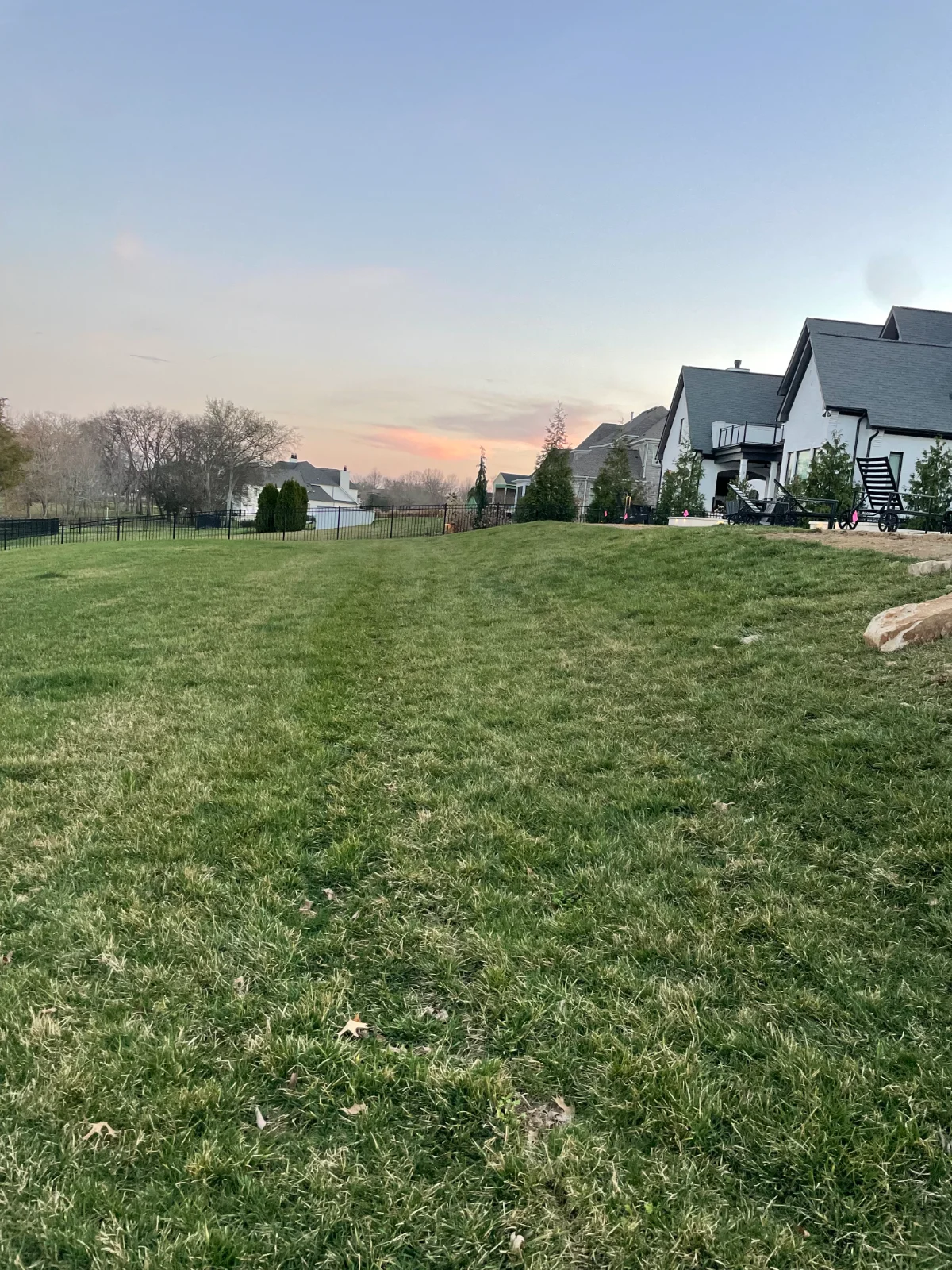
Low-voltage cable run beneath an established lawn with the L2 Line Layer — the only machine of its kind in the Nashville market.
Trenchless Wire Burial · Nashville & Middle TN
Low-voltage cable run beneath an established lawn with the L2 Line Layer — the only machine of its kind in the Nashville market.
What We Do
Trenchless wire burial is the practice of running low-voltage lighting cable beneath an established lawn without trenching, using a precision blade machine that slices a narrow path and pulls wire through it. Light TN performs trenchless wire burial across Middle Tennessee with the L2 Line Layer — the only machine of its kind in the Nashville market — reaching large, sloped lots without scarring the turf.
Light TN is a family-owned landscape lighting designer in Burns, Tennessee, and the only company in the Nashville market running the L2 Line Layer. The studio uses it on 500+ Middle Tennessee projects since 2020, installing to licensed contractor CE-D: 76580 standards so an established lawn stays whole.
The Craft
The method serves the design, so light goes exactly where the property needs it. Fixture placement isn't limited by how much lawn you'll dig up — cable can reach a back-corner specimen tree without tearing up the grounds in between.
You're left with an intact lawn: no trench scar across turf that took years to fill in. The L2 Line Layer slices a thin path through the soil, the cable is drawn down into it, and the turf closes back over with minimal disturbance.

What's Included
Low-voltage cable burial — 12-volt cable run beneath the lawn with minimal disturbance, no open trench.
The L2 Line Layer — a precision reciprocating-blade machine that slices a thin path and pulls wire down into it.
Reach across the property — cable run to the far, sloped corners of a large lot without tearing up turf.
Clean, concealed runs — wire kept out of sight as part of craftsmanship that disappears.
Standards-based install — performed to licensed contractor CE-D: 76580 standards.
An intact established lawn — turf that took years to fill in is left whole, not cut open and reseeded.
Who It's For
Trenchless wire burial is for established lawns that conventional trenching would scar, and for large or sloped lots where fixtures sit far from the power source. On heavy-clay Middle Tennessee properties, trenches recover slowly — so the method matters most where the turf is finished and mature.
It suits homeowners adding lighting to a finished landscape and designs that need to reach the far corners of a property. Middle Tennessee's heavy clay makes trenching across a finished lawn a scar that takes a season to heal. We bury low-voltage wire with the L2 Line Layer — the only trenchless machine of its kind in the Nashville market — so cable goes in and your established turf and beds stay whole.

Our Process
Cable paths are mapped to the lighting design and fixture layout before any blade touches the soil.
The L2 Line Layer cuts a thin path through the soil — a narrow slit, not a wide strip of removed sod.
Low-voltage cable is drawn down into the path the machine has cut.
The turf closes back over the path with minimal disturbance, leaving the lawn intact.
Cable is connected to the transformer and zones, then verified to licensed contractor CE-D: 76580 standards.
What Sets Light TN Apart
A trenchless capability most installers in the Nashville market can't offer. The only L2 Line Layer in the market.
Reaching a back-corner specimen tree without damaging the grounds. Craftsmanship that disappears — clean, concealed runs alongside shielded fixtures.
Licensed contractor CE-D: 76580, BBB A+, and 4.9 stars across 62 verified reviews.
FAQ
Use cable intended for underground landscape lighting, a planned route and an installation method suited to the property. Light TN uses the L2 Line Layer to place low-voltage lighting cable through a narrow slit rather than an open trench across an established lawn. We map cable paths to the fixture layout before installation, then connect and test the system. The objective is minimal disturbance; soil, roots and access still need to be assessed before choosing the route.
A cable plow places cable underground through a narrow cut instead of excavating an open trench. Light TN uses Lineward’s L2 Line Layer for low-voltage lighting runs. The manufacturer describes a reciprocating blade that cuts a slit while installing the line, and a machine width of 26 inches. That compact size is useful when evaluating access to a finished landscape. The overall route, gates, terrain and working clearance still need an on-site assessment; machine width alone does not guarantee access.
Light TN includes trenchless wire burial in its lighting installation approach rather than charging a separate premium for the method. The overall lighting project is quoted after the on-site design assessment, so a generic per-foot digging price is not a quote for your property. The design establishes the fixture locations and cable routes before work begins. Our published terms provide a free consultation, no deposit for smaller projects, and a 15% deposit for projects over $10,000.
The correct depth depends on the lighting system’s instructions and the electrical requirements that apply to the installation. VOLT’s current installation guide describes low-voltage cable as typically buried at least six inches deep, while directing installers to check local code. That reference does not establish the required depth for every cable type, driveway crossing or Nashville property. Light TN plans the cable route before installation. The specified cable, protection and site conditions must be considered together, rather than choosing depth from an online rule alone.
A cable specifically designed for direct burial may be installed in soil without a continuous conduit, subject to its instructions and applicable installation requirements. That does not mean protection is unnecessary everywhere. VOLT’s installation guide, for example, calls for conduit around wire exiting the transformer until it reaches the ground. Plan exposed transitions and crossings before burying the run. Light TN’s service uses low-voltage lighting cable; the cable specification and route determine the appropriate protection for the project.
Yes, if that particular cable is identified for direct burial and is suitable for the specified low-voltage lighting system. The description “12/2 outdoor wire” alone is not enough to select it. VOLT, for example, identifies its 12/2 landscape cable as direct-burial cable specifically designed for low-voltage landscape lighting. Check the actual product marking and installation instructions before the run goes underground. Light TN’s trenchless service is for low-voltage lighting cable, with the route planned as part of the lighting design.
Neither size is automatically right for every property. The design should match the cable to the route length and the fixtures’ combined load. VOLT recommends different wire sizes for different run lengths, with its 12/2 cable intended for longer runs than its 14/2 cable. Light TN maps the buried cable routes to the fixture layout before installation. Make the cable-size decision at that stage, so the lighting plan and the wiring support each other before the lawn is crossed.
There is no single maximum distance established by the “12-2” label alone. The layout must account for connected wattage, transformer output and voltage drop along the route. VOLT recommends its 12/2 direct-burial landscape cable for runs of 100–200 feet, but that is a product reference rather than an approval for every system. Light TN maps the cable paths to the fixture layout before installation. A distant fixture should be part of that electrical plan before its cable is buried, rather than added to an existing run without checking the load.
For a finished lawn, buried lighting cable keeps the wire run concealed and out of the normal path of lawn maintenance. Light TN designs clean, concealed low-voltage runs beneath established turf, using a narrow-slit method to limit disturbance. The cable still needs to be suitable for underground use and installed with the required cover and protection. Leave the route documented for future landscaping or other work; “out of sight” does not mean the cable can be forgotten when the property changes.
No. Tennessee 811 says to contact 811 before every digging job, including small projects, because utility depths vary. Its normal locate process requires at least three working days’ notice, followed by checking the ticket responses and marks before work starts. Light TN publishes that it coordinates utility locates before trenchless burial begins. Private lines, including irrigation and some wiring beyond the meter, may not be marked through 811 and may need separate locating. A narrow slit or shallow route does not remove that planning step.
Explore
Get Started
Book a free on-site design consultation with Daryl and the Light TN team to start.