Nashville Commercial Outdoor Lighting

Nashville commercial outdoor lighting: composed presence, safe coverage

Facade, landscape, entry, walkway, and parking-area lighting for Nashville offices, retail, hospitality, HOAs, churches, venues, and managed properties.

Licensed CE-D: 76580Efficient LED · BBB A+
KPM
4.9★ · 62 reviews★★★★★
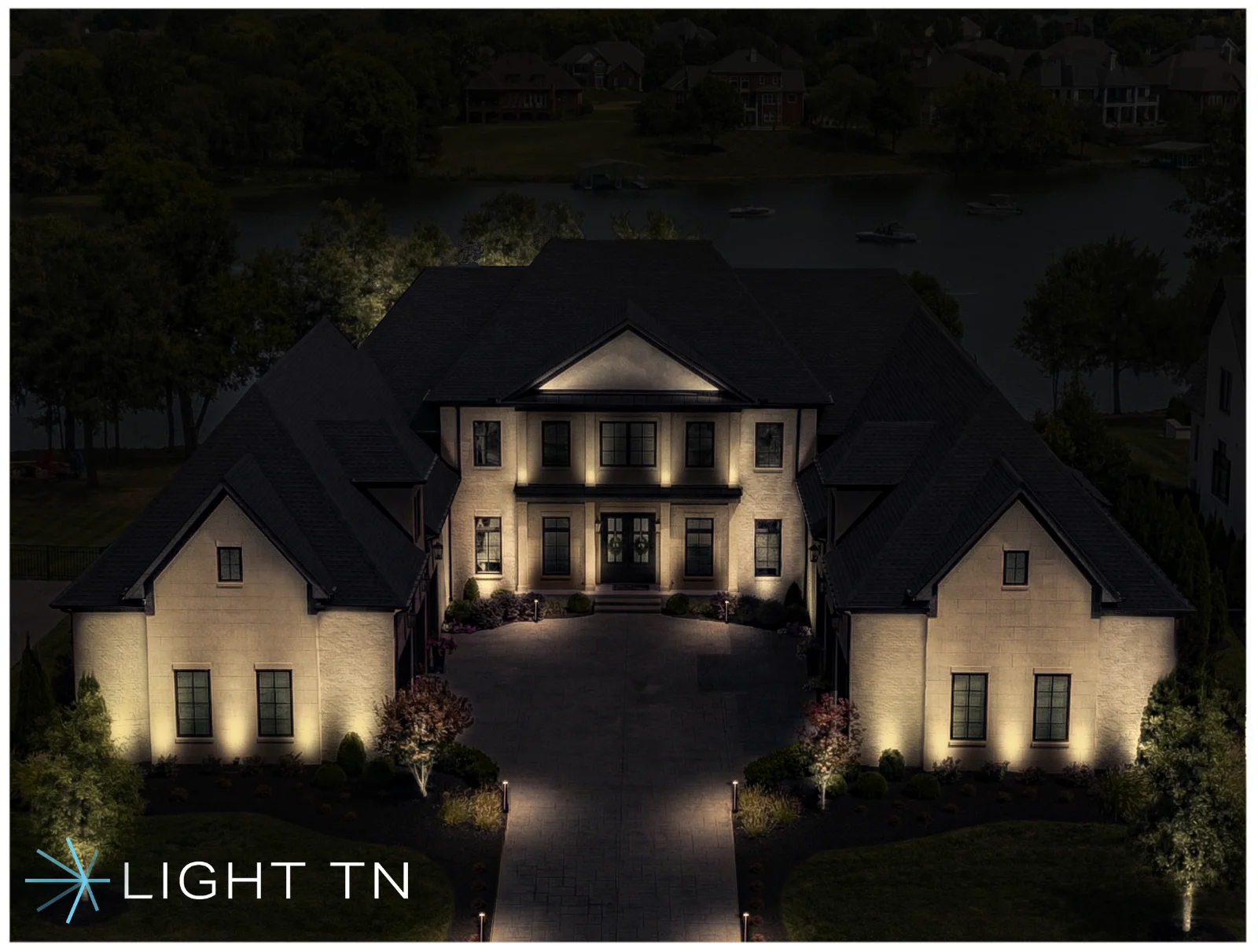
The same commercial property lit after dark
Facade & signage
Parking & path safety
Efficient LED
Scheduled control
Trenchless burial

What We Do

A composed presence,
and safe coverage.

Commercial outdoor lighting is exterior lighting for offices, retail, hospitality, HOAs, churches, venues, and managed properties, covering facades, landscape, entries, walkways, signage, and parking. Light TN designs commercial outdoor lighting across Nashville and Middle Tennessee with the same restraint as its residential estate work — a composed nighttime presence plus safe, even coverage, rather than flat floodlighting.

Light TN is a family-owned landscape lighting designer in Burns, Tennessee, led by Principal Designer Daryl Bentfield. The studio applies estate-level design discipline to commercial properties from Nashville's west-side offices to Franklin retail centers and Brentwood hospitality properties, installed to licensed contractor CE-D: 76580 standards, with efficient LED and trenchless wire burial, across 500+ Middle Tennessee projects since 2020.

Commercial Properties We Light

Designed for the way
the property is used.

Restaurants & hospitality — patios, entries, valet paths, and facades lit for arrival without spilling glare into dining areas.

Offices & professional buildings — warm architectural presence, visible entries, and walkways that read clearly after closing.

Retail & mixed-use properties — storefront, landscape, signage, and pedestrian lighting designed as one exterior system.

Churches, venues & schools — entries, gathering paths, monuments, and landscape edges lit with restraint and clear footing.

HOAs & community entrances — monuments, gates, medians, and walking paths that stay legible without flooding the neighborhood.

Property managers — one relationship for design, installation, aiming, and service across multiple Nashville and Middle Tennessee properties.

The Craft

Safer, not harsher.
Composed, not floodlit.

The building is lit from its architecture, with the entry and signage surround composed for arrival. The drive, entry plantings, and grounds are lit so arrival reads considered — the property reads with intention at night, set apart from neighbors lit with bare wall packs.

Coverage is uniform and shielded across entries, walkways, and parking, removing dark gaps and glare hot spots. The result improves visibility without the harshness of bare floodlights, and efficient LED specified for commercial run times meaningfully reduces energy use.

Facade & signage Parking & path safety Hospitality Maintenance plans
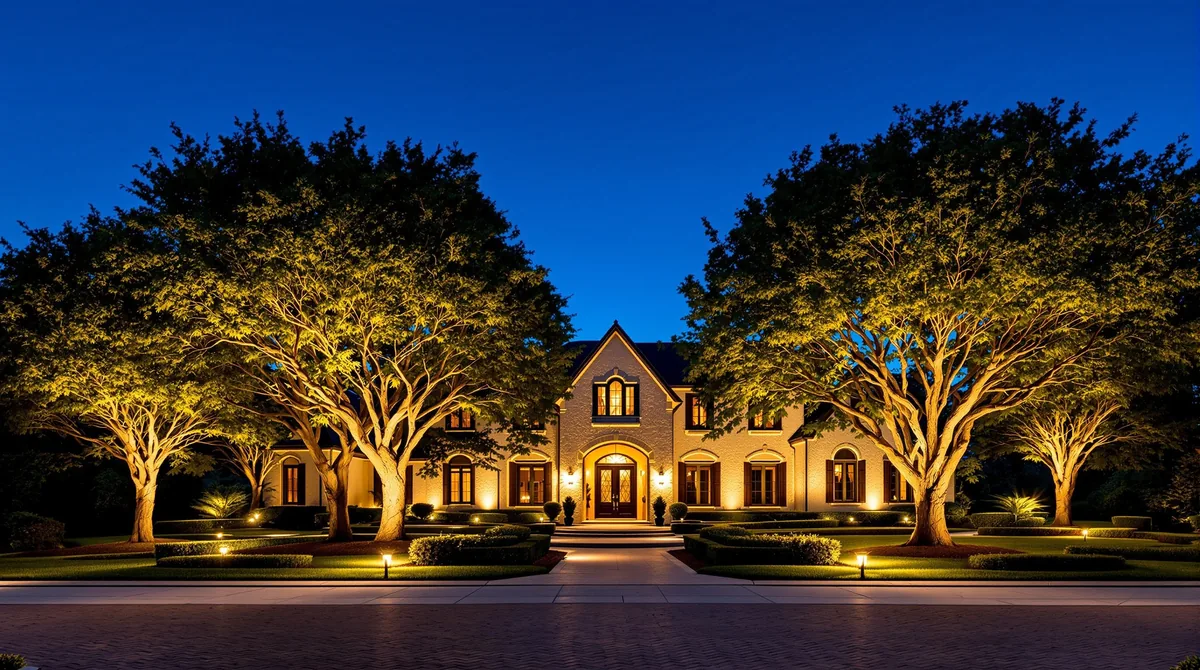
A commercial property lit after dark

What a System Includes

One studio for the
whole property.

Facade & signage lighting — the building lit from its architecture, with the entry and signage surround composed for arrival.

Landscape & approach — the drive, entry plantings, and grounds lit so arrival reads considered.

Even safety coverage — uniform, shielded light across entries, walkways, and parking, removing dark gaps and glare hot spots.

Efficient LED at scale — LED specified for commercial run times, meaningfully reducing energy use.

Scheduling — smart control so the lighting follows business hours automatically.

Solid brass & copper fixtures — they patina rather than corrode, with manufacturer lifetime warranties.

Why It Matters

Lower operating cost,
minimal disruption.

Commercial run times reward efficient design. Efficient LED and scheduling reduce energy use at commercial scale, and smart control keeps the lighting at full presence during open and peak hours, then at reduced levels overnight — automatically, on a schedule that tracks sunset.

It is also an engineering problem below ground. Middle Tennessee's heavy clay makes trenching across a finished commercial landscape a scar that takes a season to heal. We bury cable with the L2 Line Layer — the only trenchless machine of its kind in the Nashville market — so wire goes in and your established grounds stay whole.

An established commercial landscape, left intact

Our Process

Designed to your property,
set to your hours.

01

Walkthrough

Daryl assesses the property, traffic, and coverage requirements.

02

Plan

Facade, landscape, and safety coverage mapped together.

03

Specification

Commercial-grade fixtures and controls specified.

04

Installation

Installed to CE-D: 76580 standards, with trenchless burial across established landscapes.

05

Scheduling

Lighting set to the property's hours on an astronomical schedule.

What Sets Light TN Apart

Estate discipline,
commercial scale.

Estate Discipline, Commercial Scale

The same restraint and shielding applied to luxury homes, at the durability a business needs. A plan and rendering are approved before work begins.

Minimal Disruption

Trenchless burial keeps an established commercial landscape intact — the L2 Line Layer is the only machine of its kind in the market.

Licensed & Proven

Licensed contractor CE-D: 76580, BBB A+, and 4.9 stars across 62 verified reviews.

FAQ

Commercial lighting,
answered.

What are the best exterior lights for a commercial building?

The best choice depends on what each part of the property needs to do. Directional fixtures can highlight a facade or sign, path lights can define pedestrian routes, and wider beams can cover larger outdoor areas. Haven Lighting’s commercial guide distinguishes these fixture roles. Light TN designs the building, landscape and arrival areas together, then specifies commercial-grade fixtures and controls. Compare the coverage, shielding and aiming from the places people actually stand and walk. A fixture that looks impressive in a catalog may still create glare or leave the entrance difficult to read.

How much does professional outdoor lighting cost?

Light TN quotes commercial outdoor lighting after an on-site assessment of the property’s size, complexity and required coverage. The consultation is free. A useful proposal starts with the areas that need lighting: the building, customer approach, walkways, landscape and any parking coverage. It should also make the fixture specification and operating controls clear. Those decisions define the project more accurately than a generic per-light price. Bring your business hours and priorities to the walkthrough so the design and quotation address the way your property is used.

How can I plan outdoor lighting like a designer?

Start with the journey from arrival to entrance, then identify the architectural and landscape features that deserve attention. For a commercial property, discuss pedestrian routes, gathering areas, business hours and views from neighboring properties before selecting fixtures. Light TN’s walkthrough considers traffic and coverage, followed by a plan that maps the facade, landscape and functional lighting together. DarkSky and the Illuminating Engineering Society recommend giving each light a clear purpose and controlling when it operates. Use that discipline to review the whole plan before installation, rather than adding isolated lights whenever a dark area appears.

What is the rule of thumb for outdoor lighting?

Use light where it is needed, at the level needed, for the hours needed. DarkSky and the Illuminating Engineering Society express this through five principles: useful, targeted, low-level, controlled and warm-colored lighting. For a business, that means reviewing the entrance, pedestrian routes and property boundaries separately instead of selecting one brightness for the entire site. Light TN applies shielding and aiming to its commercial design. Treat the principles as a design review framework, not a substitute for the project’s electrical specification or any applicable requirements.

What are common outdoor lighting mistakes?

Common mistakes include sending light beyond the intended area, using more brightness than the task needs, and leaving decorative lighting on when it has no useful purpose. DarkSky’s guidance addresses each of these problems through shielding, careful aiming, appropriate light levels and controls. On a commercial property, review the view from the customer entrance, walking routes and neighboring boundary. Light TN designs even coverage and a composed facade together. A brighter building should not come at the expense of glare into a dining area or a poorly defined route to the door.

Do outdoor lights pull a lot of electricity?

Electricity use depends on the system’s total wattage and operating hours. To estimate daily energy use, multiply watts by hours and divide by 1,000 for kilowatt-hours. For illustration, a 100-watt total load running for ten hours uses one kilowatt-hour; that is not an estimate for your property. Light TN specifies LED and schedules commercial lighting around business hours and overnight needs. DarkSky recommends reducing unnecessary light and operating it only when needed. Ask for the proposed wattage and schedule so you can compare the design using your own electricity rate.

Are dusk to dawn lights a good idea?

They can suit areas that need light throughout the night, but every fixture does not need the same schedule. Light TN’s commercial systems can keep selected perimeter lighting on from dusk to dawn while facade or signage lighting follows business hours. Other zones can run at reduced levels overnight. DarkSky recommends using controls to provide light when needed and dimming or switching it off when it is not. Decide which routes and entrances remain in use after closing, then set the schedule around those needs rather than treating all-night operation as an automatic requirement.

Which is better for outdoor lighting, dusk-to-dawn or motion sensor?

Choose the control around when the area is used. Dusk-to-dawn operation provides a scheduled nighttime layer; motion control supplies light in response to activity. DarkSky identifies motion detectors and timers as tools for limiting unnecessary light. A commercial plan can separate customer and staff routes from areas with occasional use, rather than applying one control to the whole property. Light TN specifies controls as part of its commercial design. Discuss any motion-sensor requirement during specification, because the appropriate equipment and behavior must be confirmed for that project.

What are some common problems with outdoor lighting?

Common problems include failed lamps, vegetation blocking the beam, damaged wiring and deteriorating fixtures. TCP’s outdoor maintenance guide identifies these issues for commercial and residential systems. On a business property, also note which entrance, walkway or other area has lost coverage, so the service request describes the effect as well as the fixture. Photograph the location and record when the problem occurs. Damaged or frayed wiring needs professional attention. Light TN offers ongoing service for commercial properties; a fault should be assessed before assuming the whole system needs replacement.

What are the steps involved in a lighting maintenance checklist?

Build the checklist around inspection, cleaning, vegetation clearance and a check of the intended lighting schedule. TCP recommends regular fixture cleaning, trimming surrounding vegetation and inspecting wiring, with power turned off before cleaning. Follow the specific fixture’s instructions and have electrical defects assessed by a qualified professional. For a commercial property, record the affected location and check that the system still serves the current business hours. Light TN offers ongoing service for owners who prefer scheduled visits. Agree on the inspection scope for your property instead of assuming a warranty replaces routine upkeep.

Get Started

Light your property with intention.

Book a free on-site design consultation with Daryl and the Light TN team to start.

★★★★★
4.9
Average rating across 62 verified reviews across Middle Tennessee.