

Light TN designs in low voltage for the same reason most serious outdoor lighting is built that way: a 12-volt system is safer to work around, gentler on a planting bed, and far more precise than a string of plug-in fixtures.
The question is rarely whether to use low voltage. It is which fixtures go where, and why. For the full picture of how we plan a system end to end, see our landscape lighting service.
01What low voltage landscape lighting actually is
Low voltage landscape lighting is an outdoor system that steps household 120-volt power down to 12 volts through a transformer, then distributes it to fixtures over buried cable. The lower voltage is what makes the system both safer to handle and easier to adjust after planting beds mature. According to the U.S. Department of Energy, LED sources — which nearly all low voltage fixtures now use — draw roughly 75% less energy than incandescent and last far longer, which is why a modern system runs for pennies a night.
The transformer is the heart of it. We size it to the total fixture load with headroom to spare, because an overloaded transformer dims the run and shortens fixture life. Light TN specifies transformers and runs to leave room for a property to grow rather than wiring it to the edge on day one.
02Path and area lights
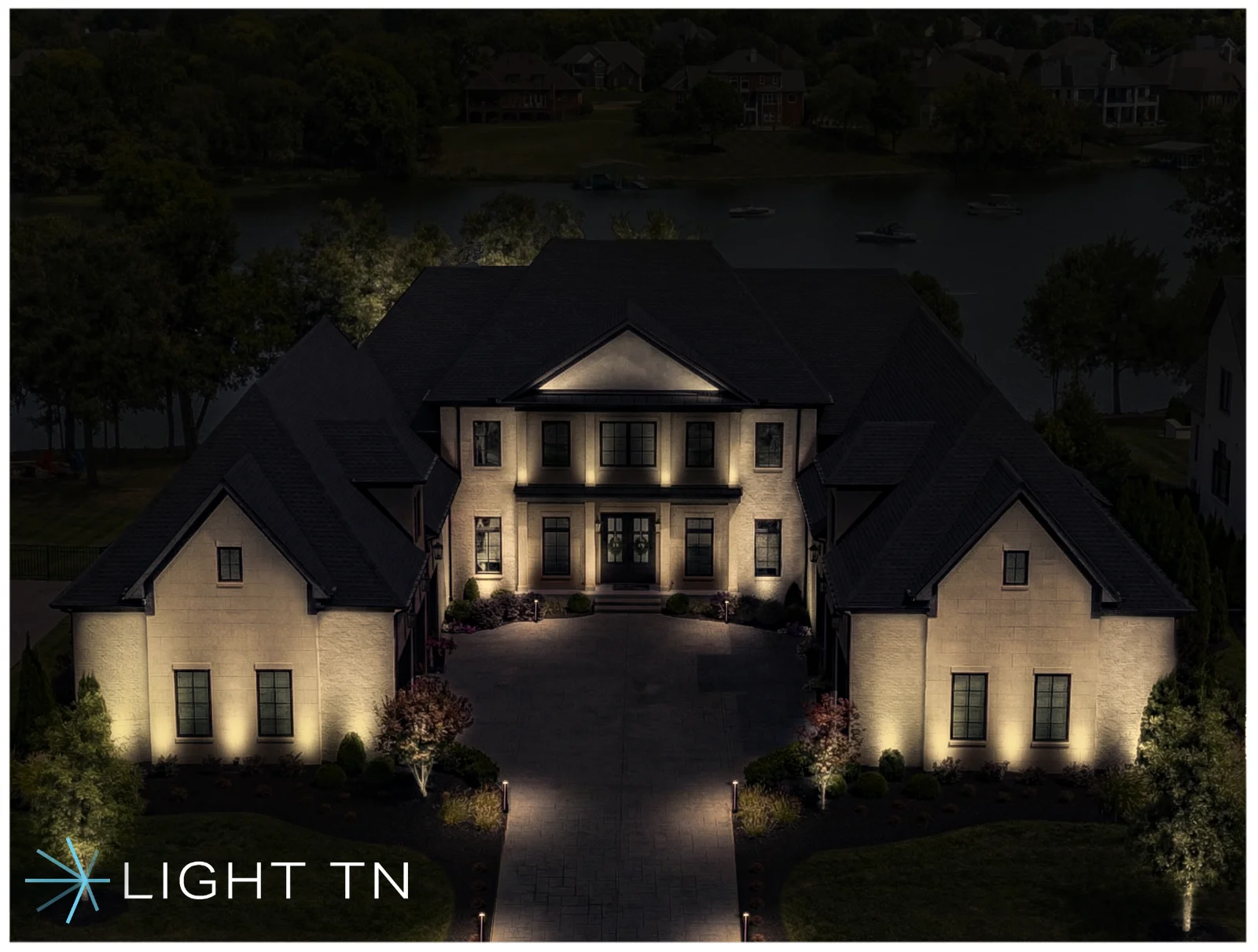
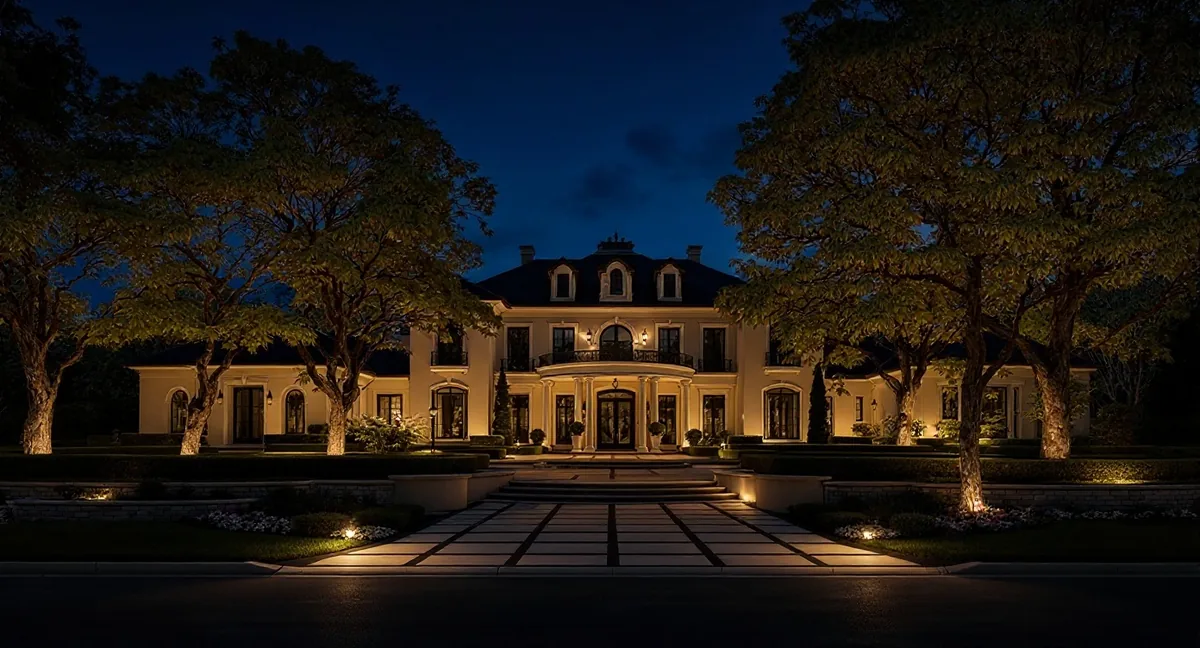
Path lights guide movement and define an edge — a walkway, a bed line, the turn of a driveway. The discipline is restraint: a path light shielded below eye level casts light on the ground where you need it without the source ever hitting your sightline from the driveway. That single detail is what most kit installations miss, and it is the difference between guidance and glare.
We space path lights for overlap of light, not overlap of fixtures. A row of evenly spaced bollards reads like an airport runway; a considered layout lights the path and lets stretches fall into shadow. Light TN places each one against the planting and the grade in front of it.
03Uplights, well lights & moonlighting
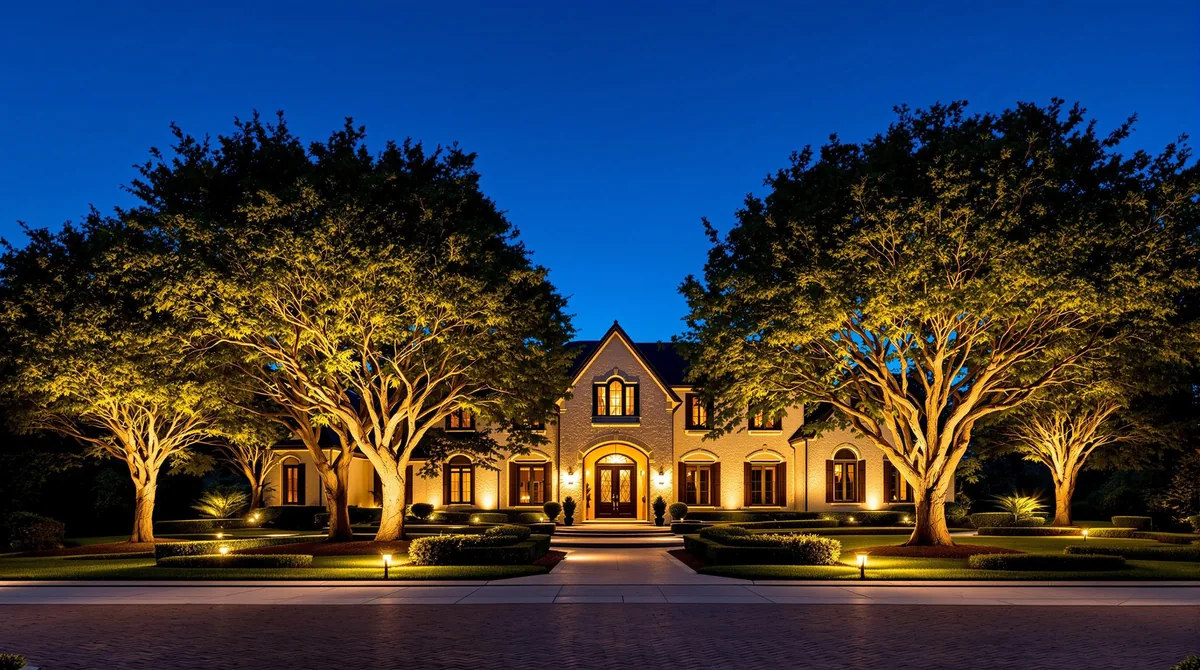
Uplighting and downlighting are the two halves of how a property gains depth after dark. Uplights sit at or below grade and wash a facade, a column, or a tree trunk from below; well lights do the same job recessed flush into the ground where a fixture should never be seen. Downlighting — what we call moonlighting when it comes from high in a tree — drops a soft, dappled pattern across a lawn or path the way a full moon would through the canopy.
Most properties want both. We uplight the architecture and the specimen trees for drama, then add downlighting for the gentle, natural light that makes a yard feel calm rather than staged. On a mature oak, that often means fixtures mounted thirty feet up in the canopy and aimed down through the limbs — a decision made on site, after dark.
04Color temperature: why 2700K matters
Color temperature is measured in kelvin, and on a residential property it changes everything. Light TN designs almost entirely at 2700K — a warm white that flatters stone, brick, and foliage. A cooler 3000K or 4000K source pushes a facade toward a flat, commercial look and turns green foliage gray. On a stone facade, we test two or three color temperatures on site before committing, because the wrong one makes the material look lifeless.
Consistency matters as much as the number. A system where some fixtures read warm and others read cool looks broken even to an untrained eye. We specify one temperature across the property so the whole composition holds together.
05Installation: protecting an established lawn
A low voltage system is only as clean as its wire runs. On Middle Tennessee’s heavy clay, trenching across an established lawn leaves a scar that takes a season to recover. Light TN buries low-voltage cable with the L2 Line Layer — a trenchless machine and the only one of its kind in the Nashville market — so cable reaches the far corners of a large or sloped lot without cutting the turf open.
Installation is completed to licensed contractor CE-D: 76580 standards, and we return after dark to aim every fixture on the grade. That final visit is where a designed system separates from an installed one.
06A designed system vs. a kit
A big-box low voltage kit gives you fixtures and wire. What it cannot give you is the judgment about where light belongs, how it should be shielded, and what the eye should never see. Light TN has completed more than 500 projects across Middle Tennessee since 2020, and the systems that still look right years later are the ones designed to the property — not assembled from a box. The design accounts for how a tree’s canopy will fill in and how a planting bed will change across five years.