Landscape Lighting · Green Hills, TN
Landscape lighting for Green Hills' established lots
Light TN, a Burns studio, designs landscape lighting for the established, in-town lots of Green Hills and the surrounding Nashville neighborhoods.

Landscape Lighting · Green Hills, TN
Light TN, a Burns studio, designs landscape lighting for the established, in-town lots of Green Hills and the surrounding Nashville neighborhoods.

Landscape Lighting in Green Hills, TN
Green Hills is rebuilding itself one lot at a time. The mid-century ranches that filled the neighborhood after the war are coming down, replaced by larger Georgian and Tudor homes — but the trees stay, and the lots are generous enough to hold them. Landscape lighting here works with the constant, not the construction: the mature canopy and the established lawn that outlast whichever house is on the lot. Light TN is a landscape lighting designer based in Burns.
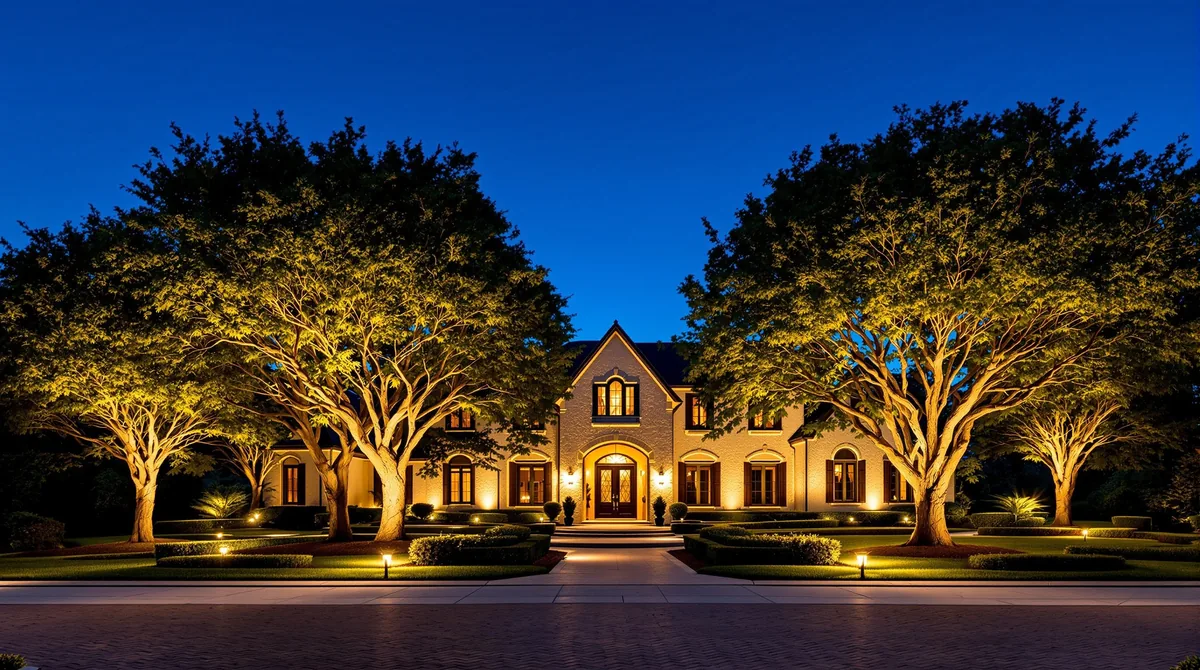
The trees are the reason. A Green Hills lot often carries an oak or maple older than anyone on the street, and it sets the whole composition. We light it from the crown and the base, and shield the source below eye level, so from the sidewalk you read the lit tree and never the fixture tucked in the bed beneath it.
What an In-Town Green Hills Lot Asks For
Green Hills lots are larger than most of in-town Nashville, with room a tight lot never has. That space lets the design breathe — a tree uplit, a bed grazed, a path lit — and because a replanting fills in over time, we aim for the canopy the lot will hold in five years, not just today.
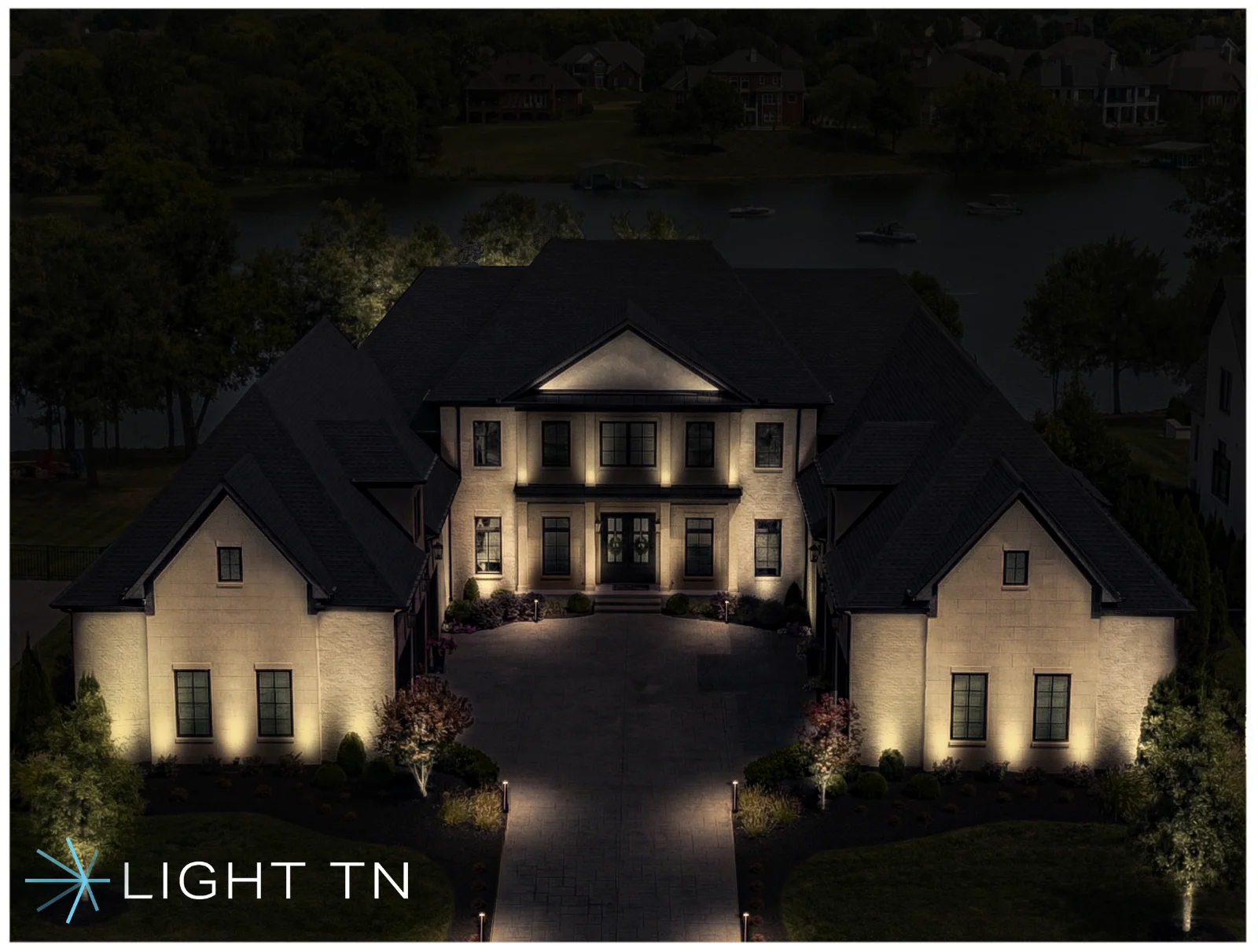
The homes replacing Green Hills' ranches are Georgian, Colonial, and Tudor — brick and stone, symmetry, a centered entrance. We graze that masonry with warm, even light and balance the landscape to it, in matched runs rather than scattered points, so the new house and its grounds read as one composition.
An in-town lot has neighbors close on both sides, so spill is the discipline. We shield and aim each fixture to the property line, keeping the light on your trees and beds and off the house next door — the kind of restraint a close-set Green Hills street rewards and a careless install ignores.
Why Green Hills Trusts Light TN
Daryl Bentfield designs every Green Hills project himself and is on site with the crew — the designer who walks your lot is the one who aims the lights after dark. Light TN holds a 4.9-star rating across 62 Google reviews, installs to licensed contractor CE-D: 76580 standards, and backs the work with manufacturer lifetime fixture warranties, a one-year workmanship warranty, and an annual fixture failure rate under 1%.

Green Hills Areas We Light
FAQ
Light TN sets the price from the property assessment and design, so there is no fixed Green Hills package to apply to every lot. A replacement home with retained mature trees can need a different plan from an original house whose garden lighting is being refreshed. Identify the approach, planting and tree features included, the cable routes and any coordination with ongoing work. The published cost guide bases pricing on the property, fixtures, zones and power distribution. The consultation is free, and the rendering and scope are reviewed before proceeding. Compare the same defined areas when reviewing proposals.
Begin with the route from the house and the places where you sit, then choose the planting or tree features that give the garden depth. Light TN’s design guide separates path and bed lighting, selected accents and suitable overhead downlighting. On the established lots described here, a retained canopy can remain the main landscape feature even when the house changes. Review the composition from the new or existing windows as well as from the garden. Keep light directed onto the chosen tasks and check the views toward adjacent homes. The plan should connect the spaces you use after dark without requiring every part of the yard to be equally bright.
Use fixtures with suitable shielding and beam control, positioned so the source is kept out of the important viewing directions. For a path, direct light onto the walking surface; for a tree, choose the beam and aim for the feature being revealed. Kichler’s tree guide describes cowls that reduce source visibility, while DarkSky and IES guidance calls for targeted light at the lowest useful level. A Green Hills review should include the sidewalk, your windows and the views toward adjacent homes. Check those positions after dark and adjust the design where needed. Fixture placement and output work together; shielding alone cannot establish that no light will spill beyond the lot.
Light TN generally starts with 2700K warm white, then reviews the effect on the materials and planting in front of it. For a Green Hills rebuild, compare the proposed light on the new brick or stone alongside any garden fixtures being retained. The house and mature landscape need to read together after dark, so the appearance of the existing equipment matters as much as a catalog label. Our published design guide explains the studio’s warm-white approach. Review a sample on site before settling the specification, and identify which existing lamps or fixtures can remain in the composition. Neither number is a universal winner for every material or every system.
Low voltage alone is not enough to determine which approvals apply. For a Green Hills property within Metro’s jurisdiction, use Metro Codes’ construction and permits route to confirm the requirements for the address and work. Its department administers building and related trades permits, with an electronic system for permits and inspections. Include any new supply, outlet or other electrical work in the inquiry, and coordinate with the broader project if a house is being rebuilt. Check any actual private architectural-review requirements separately. The lighting plan should identify the responsible authority and scope before work proceeds; this page does not assert a blanket permit exemption or a neighborhood-wide HOA rule.
Moonlighting is light directed downward from a suitable overhead position, often through tree branches, to create a dappled effect below. It is a form of downlighting. On a Green Hills property retaining older trees, consider which parts of the garden could benefit and how the source would appear from the house and nearby properties. Kichler’s guidance checks tree form, mounting arrangements, growing room and visibility from below. Dense branches can block the intended effect, so a large canopy does not automatically make every position suitable. Assess access for future service and review the result after dark before fixing the final aim.
Place the light according to the effect you want and the views from which it will be seen. A light aimed toward a feature can reveal its texture; lighting a surface behind a plant can emphasize its outline. Kichler’s techniques guide distinguishes those effects rather than prescribing one position for every bed. For a Green Hills garden changing around a replacement home, mark which planting remains and which is new before setting the positions. Allow access for adjustment as the beds grow. Check that leaves and stems do not block the intended beam, and review the view through the windows as well as from the path.
Common mistakes include placing fixtures before deciding what they should reveal, adding more brightness to solve a placement problem and leaving cable planning until hardscape work is complete. During a Green Hills rebuild, identify the trees and garden areas that will remain, then coordinate the lighting with the new entrance, paths and masonry. Kichler’s hardscape guidance recommends planning lighting and wire routes with the hardscape contractor before construction is closed. Review the whole composition and the neighboring sightlines, not just the facade. Keep a record of the selected positions and routes so later planting changes or additions can be assessed against the original plan.
A damaged cable, loose connection or control issue can leave an area dim or dark, while changed planting can hide a beam from a fixture that still works. In a Green Hills garden beside ongoing construction or landscaping, note when the change appeared and which areas are affected. Kichler’s troubleshooting guide starts with the layout, recent work and the distinction between one light, one run and the whole system. Have the cause established before changing equipment. If warranty support may apply, identify the actual fixture and installation records so its terms can be checked; the symptom alone does not establish a covered failure or a promised replacement.
Set the operating hours around when each part of the property needs light. Decorative tree or facade accents can have a different schedule from a route still used later in the evening. DarkSky and IES guidance recommends timers or other suitable controls to provide light when needed, dim it where possible and switch it off when no longer needed. Light TN plans scenes, zones and schedules, with the equipment specified for the required functions. For an in-town Green Hills setting, review the late-evening view from bedrooms and toward adjacent homes as part of that plan. There is no single overnight schedule proposed here for every property.
Explore
Get Started
Book a complimentary on-site design consultation with Daryl and the Light TN team.