

Pathway lighting and flood lights solve different problems. A path light helps people move. A flood light throws a broad beam. Confusing the two usually creates glare, dark edges, and a yard that feels harsh instead of usable.
For whole-property planning, see outdoor lighting ideas and the lighting design process.
01The main difference
Pathway lighting is low, shielded, and close to the walking surface. Flood lighting is high-output and broad. One defines a route. The other tries to cover an area.
02Where pathway lighting works
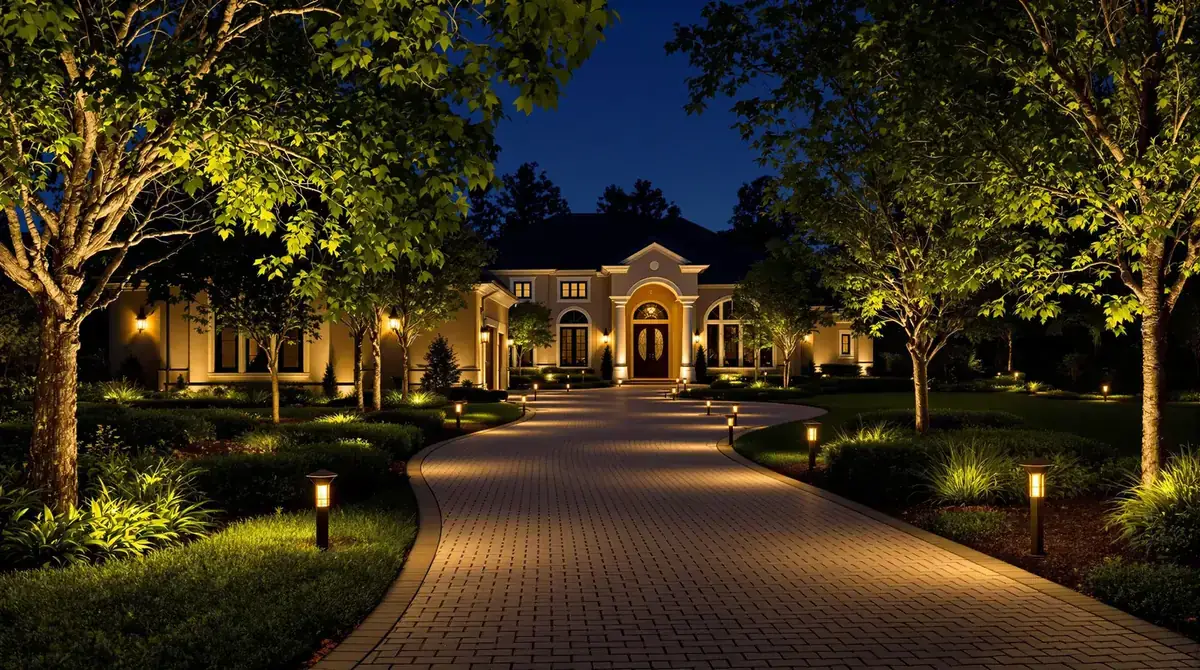
Use path lights for walks, garden paths, driveway edges, steps, grade changes, and entries. The goal is a rhythm of low light that shows footing without shining into faces.
03Where flood lights belong
Flood lights can work for service areas, occasional security coverage, or temporary task needs. They should be shielded, aimed carefully, and used sparingly.
04Why glare is the problem
More brightness does not always mean more visibility. A flood light near eye level can make people see the fixture instead of the ground. It can also push light into windows, neighbors, or the street.
05The better solution: layers
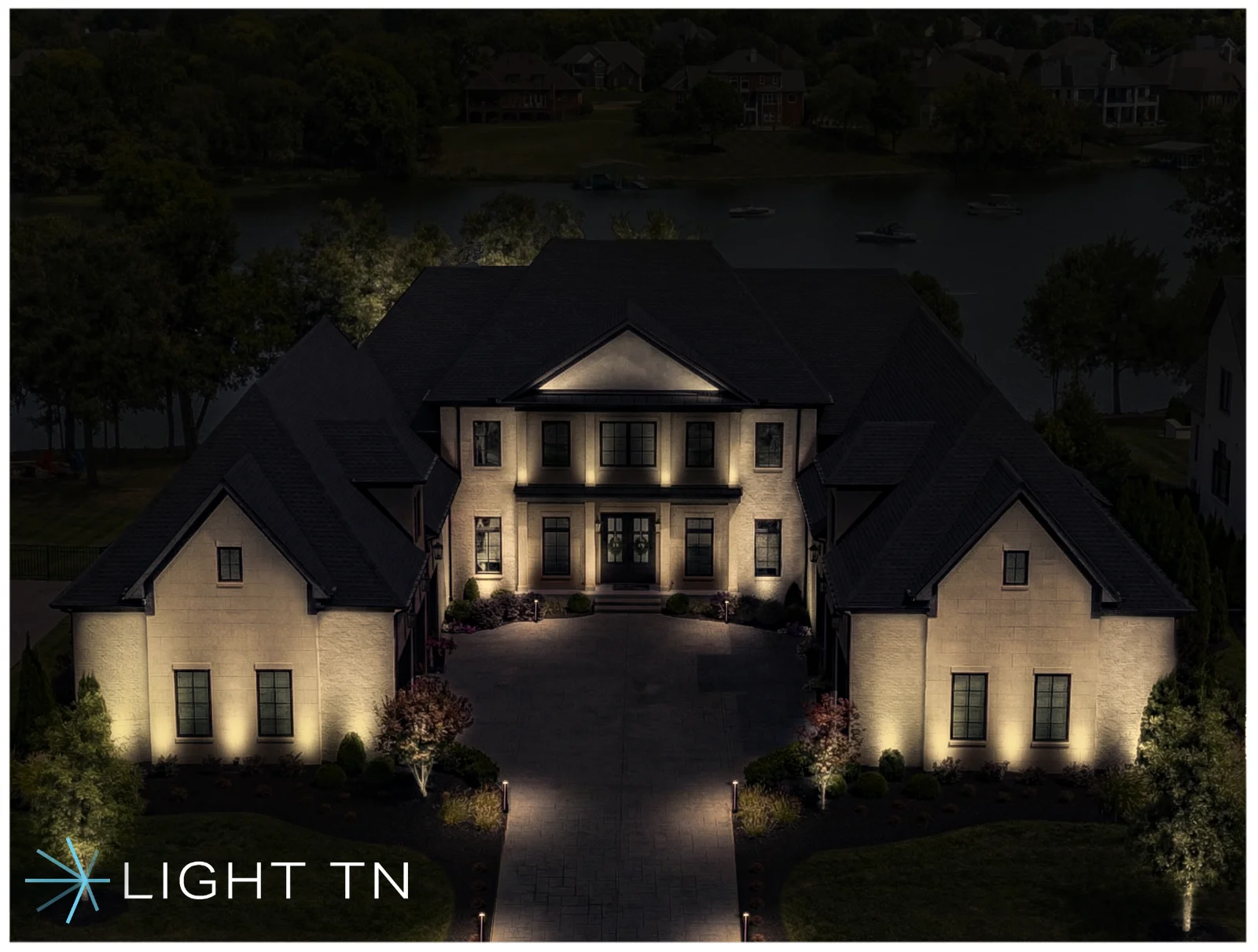
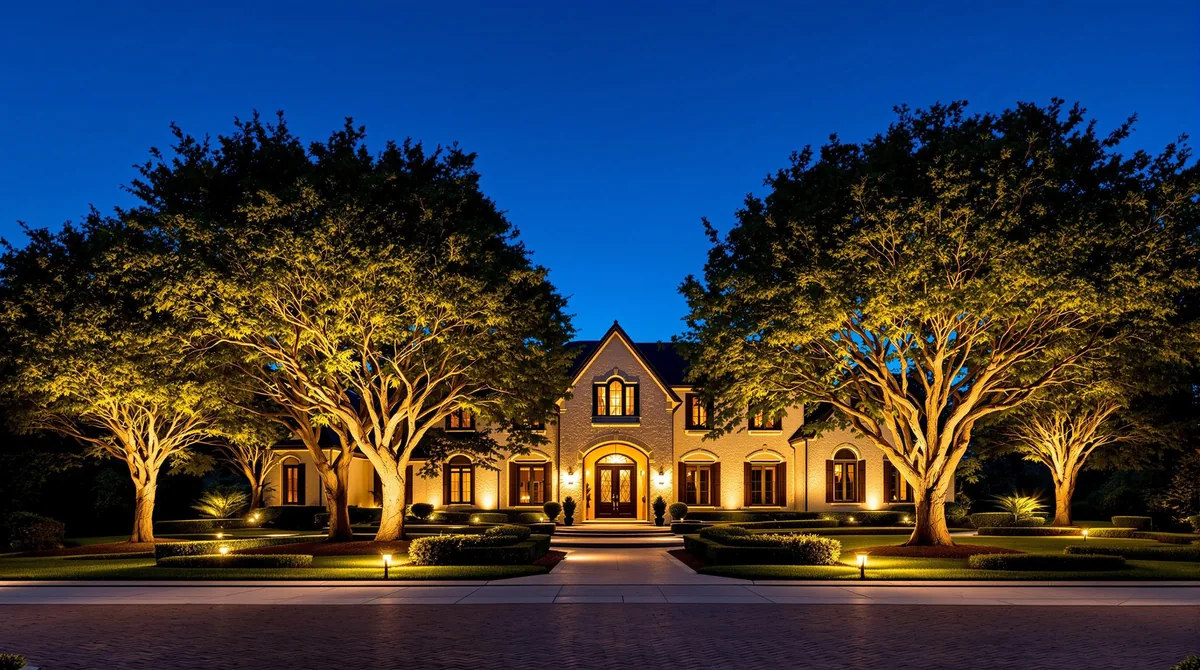
Most homes need path lights, step lights, tree lighting, facade lighting, and softer accent lighting working together. The layers let the eye understand the property without one harsh source.
06How Light TN decides
Light TN starts with the route, the architecture, the grade, and the views from inside the home. Fixture type follows the lighting effect, not the other way around.