

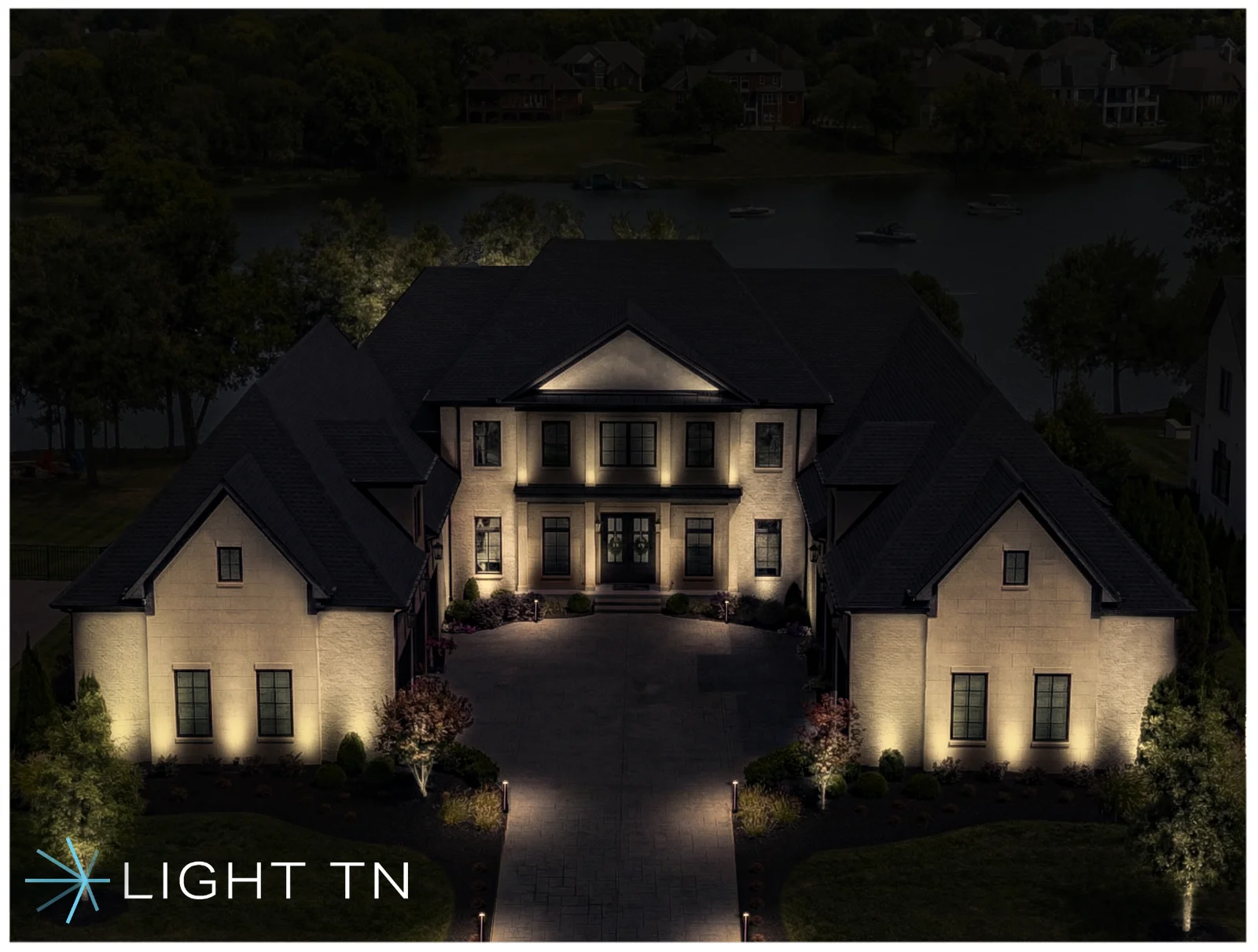
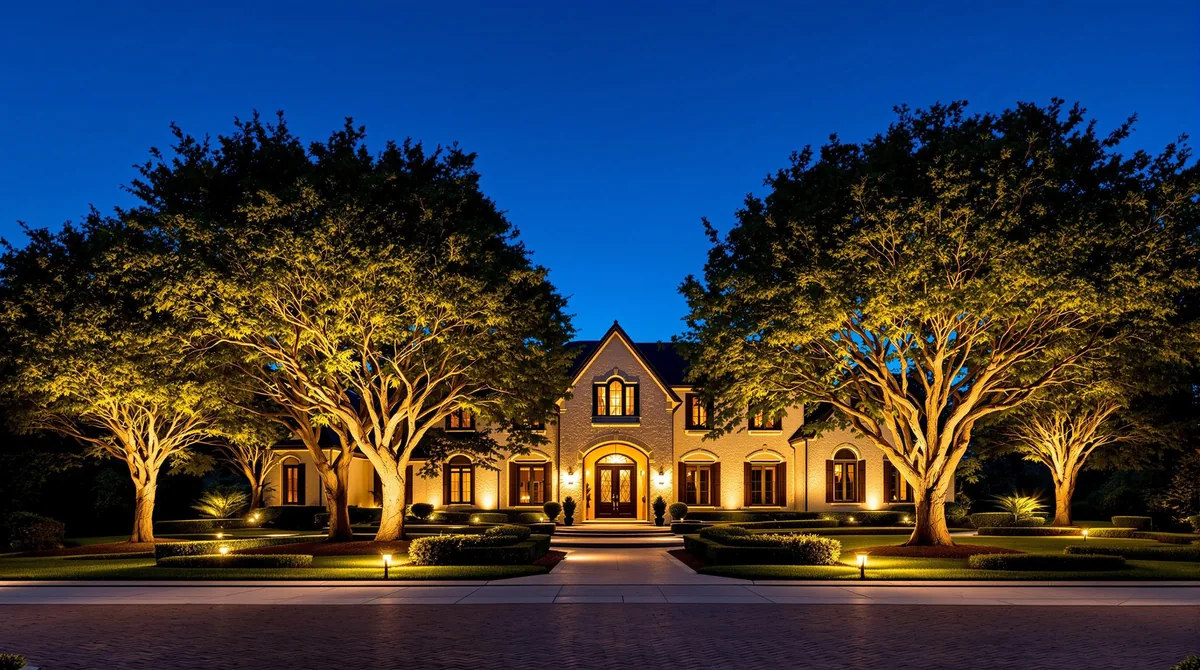
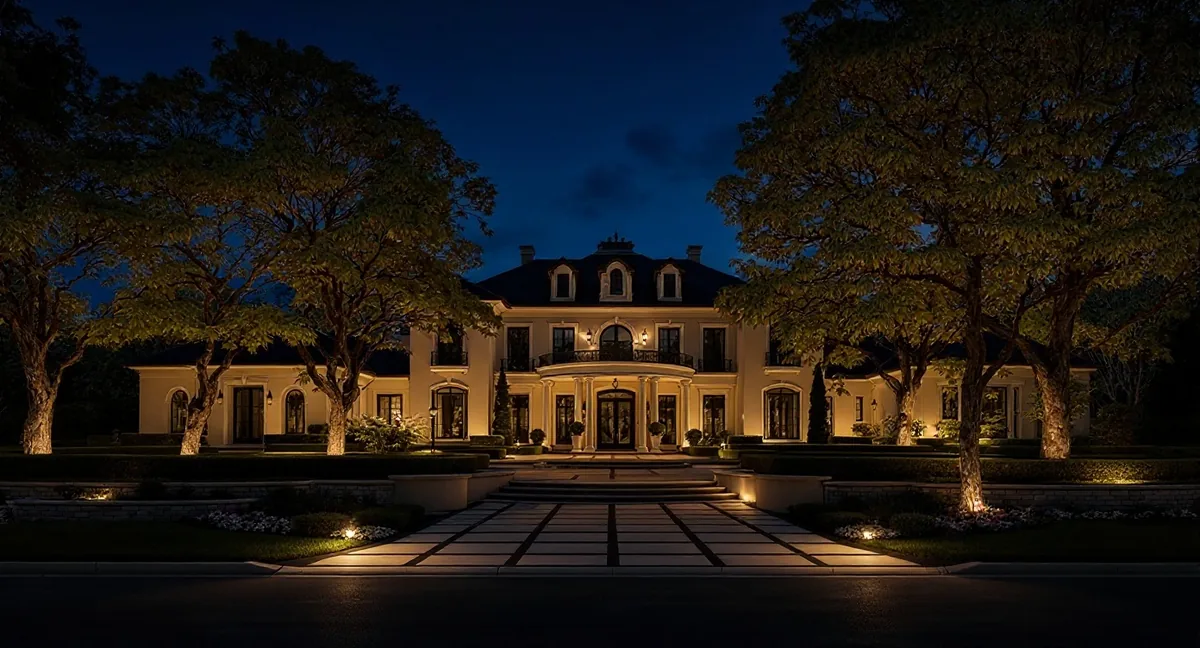
Landscape lighting fails when it is treated like a fixture shopping list. The property needs a plan: what should be revealed, what should stay dark, how people move, and how the system will be maintained.
For a design-led approach, see fixture placement planning and the installation phase.
01Installing without a design
Buying fixtures first usually leads to scattered effects. Light TN starts with architecture, landscape structure, routes, outdoor rooms, and views from inside the home.
02Using too much brightness
Bright is not the same as beautiful or safe. Overpowered fixtures flatten texture, create glare, and make everything outside the beam feel darker.
03Spacing path lights like runway markers
Path lights should create rhythm and safe footing. Perfectly even rows often look commercial and can pull attention away from the home and landscape.
04Mixing color temperatures
Warm and cool lamps mixed across one property make the system feel patched together. Color temperature should be intentional and consistent by zone.
05Undersizing transformers and wire plans
A system may look fine on day one but struggle as fixtures are added. Transformer capacity, voltage drop, cable routes, and future zones should be planned upfront.
06Skipping after-dark aiming
Outdoor lighting is finished at night. Aiming reveals glare, balance, shadows, and fixture visibility. Without it, the system is only partially installed.