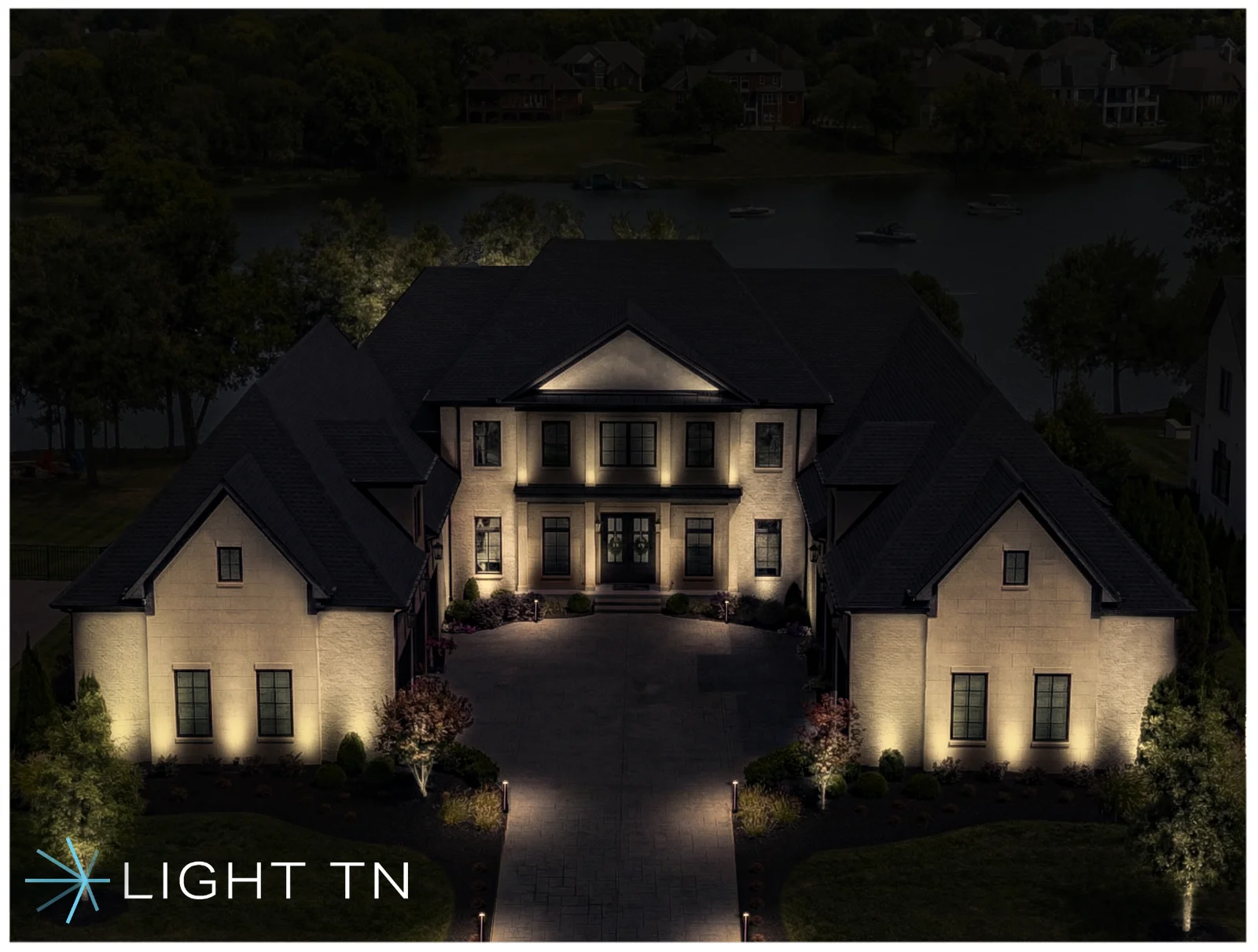
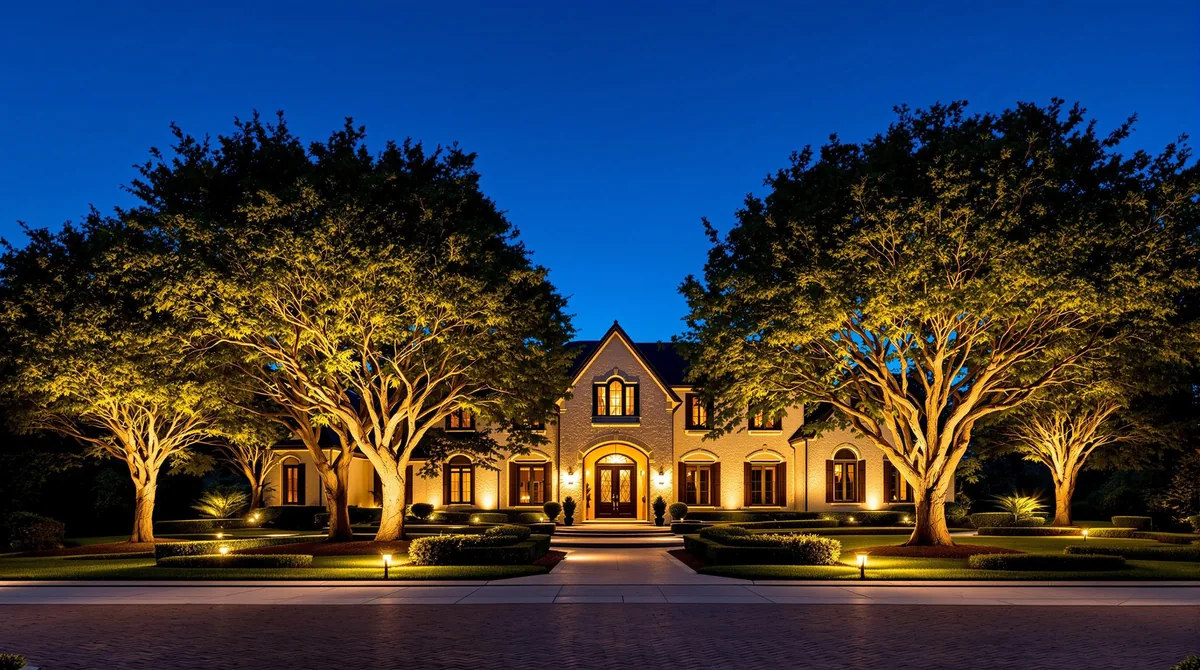
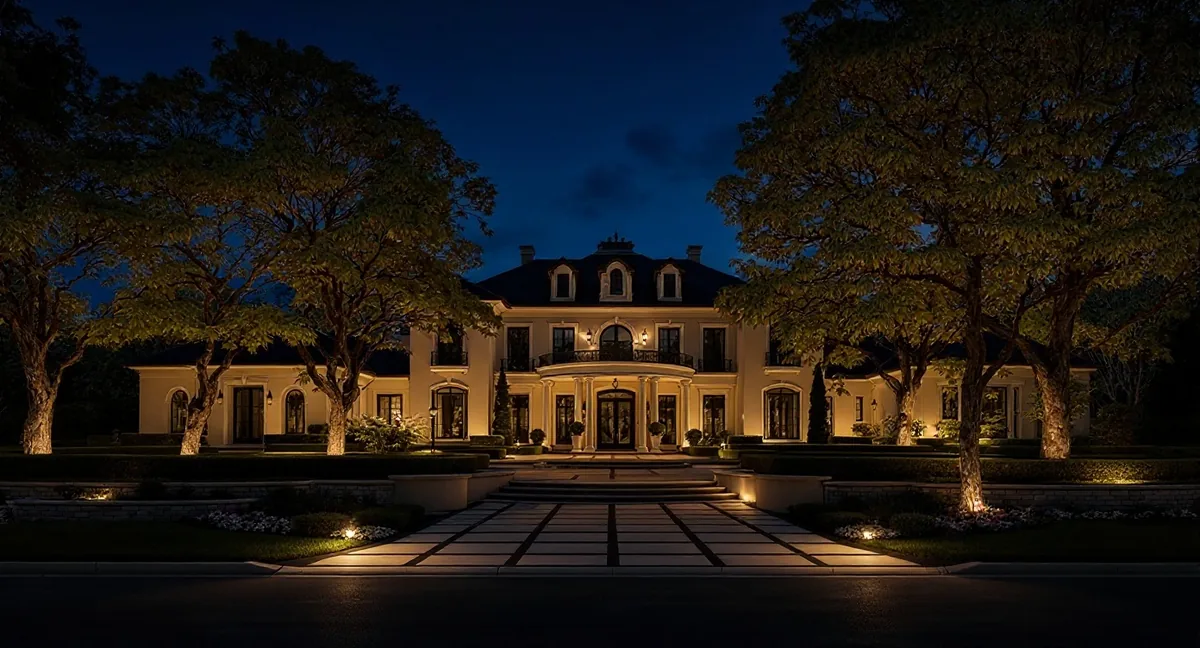
Uplighting and downlighting combined on a property by Light TN
Design & Technique

Uplighting vs. downlighting: when to use each

It’s rarely either/or. The two techniques do different jobs, and a designed property almost always uses both. Here’s what each does, where it works, and how to choose.

DB By Daryl Bentfield, Principal Lighting Designer 7 min read Light TN Journal

Light TN gets this question on nearly every walkthrough: should the lighting come from below or above? The honest answer is that uplighting vs. downlighting is rarely either/or — the two techniques do different jobs, and a designed property almost always uses both.

This guide explains what each one does, where it works, and how to decide. For how they fit into a full plan, see our landscape lighting service.

01What is uplighting?

Uplighting is the technique of placing a fixture at or below grade and aiming the beam upward to wash a surface from below. Light TN uses uplighting to carry the eye up a stone facade, a column, or the trunk and canopy of a specimen tree. It is the more dramatic of the two techniques because it lights surfaces the daytime sun rarely reaches, giving a property height and presence after dark.

Uplighting demands shielding. A source aimed upward sits in the line of sight of anyone approaching, so Light TN uses glare guards and careful placement to keep the light on the surface and out of your eyes. Done well, you see a glowing facade and never the fixture.

02What is downlighting?

Downlighting is the technique of mounting a fixture above a space and casting light downward. Light TN uses downlighting from eaves, pergolas, and high in trees to wash paths, patios, and lawns with soft, even light. It is the more natural-feeling of the two techniques because it mimics how the sun and moon actually light the world — from above.

The most prized form of downlighting is moonlighting: fixtures mounted high in a large tree and aimed down through the limbs, casting a dappled pattern across the ground the way a full moon would through the canopy. It is subtle, and it is one of the effects that most separates a designed system from an installed one.

03Uplighting vs. downlighting: how to choose

The decision comes down to the job each area needs. Light TN reaches for uplighting when the goal is drama and verticality — facades, columns, specimen trees — and for downlighting when the goal is soft, usable light on a horizontal surface like a path, patio, or lawn. Security and wayfinding lean toward downlighting; architectural impact leans toward uplighting.

In practice, the strongest properties combine them. On a single elevation, Light TN might uplight the stone face for height and downlight the entry from the eave for a natural, welcoming pool of light. That combination gives a property depth — light coming from two directions reads far richer than a single flat wash.

04Color, shielding, and restraint

Whichever direction the light comes from, the fundamentals hold. Light TN designs at 2700K so warm light flatters stone, brick, and foliage; shields every fixture so the source stays hidden; and resists the urge to light everything. Restraint is the craft — lighting the right surfaces and letting the rest fall into shadow is what gives the lit elements somewhere to stand out. Systems run on efficient LED and are aimed after dark, because the final aiming is where uplighting and downlighting are balanced against each other.


FAQ

Uplighting vs. downlighting, answered.

What is the difference between uplighting and downlighting?

Light TN defines uplighting as lighting a surface from below with fixtures at or below grade, and downlighting as casting light downward from a fixture mounted above. Uplighting adds drama and height to facades and trees; downlighting adds soft, natural light to paths, patios, and lawns. Most designed properties use both.

When should I use uplighting?

Light TN uses uplighting when the goal is drama and verticality — washing a stone facade, a column, or the trunk and canopy of a specimen tree. It lights surfaces the daytime sun rarely reaches, with every fixture shielded to keep the source out of view.

When should I use downlighting?

Light TN uses downlighting for soft, even light on horizontal surfaces — paths, patios, lawns, and entries. Mounted in eaves, pergolas, or high in trees, it mimics natural overhead light and is the gentler, more welcoming of the two techniques.

What is moonlighting in landscape lighting?

Light TN uses moonlighting to mount fixtures high in a large tree and aim them down through the limbs, casting a soft, dappled pattern across the ground the way a full moon would. It is a form of downlighting and one of the most natural-looking effects in outdoor lighting.

Can you combine uplighting and downlighting?

Light TN combines uplighting and downlighting on most properties because light from two directions gives a space depth a single wash cannot. On one elevation, that might mean uplighting a stone facade for height while downlighting the entry from the eave.

Does uplighting cause glare?

Light TN prevents uplighting glare with shielding, glare guards, and careful placement away from sightlines, then aims each fixture after dark. Done properly, you see the lit surface and never the fixture.

Which is better for security, uplighting or downlighting?

Light TN generally favors downlighting for security and wayfinding because it puts even, usable light on the ground where people walk, without glare. Downlighting from eaves and trees is what makes paths and entries safe to navigate.

How much does professional uplighting and downlighting cost?

Light TN projects vary with property size, the number of fixtures, and how the two techniques are combined. Projects over $10,000 carry a 15% deposit, smaller projects require no deposit, and the on-site design consultation is free.

DB

Daryl Bentfield

Principal Lighting Designer, Light TN

Burns, Tennessee. 25+ years of design background, 10+ years specializing in outdoor lighting, and 500+ completed Middle Tennessee projects since 2020. Daryl personally walks every property for its on-site assessment.

Soft CTA

Designed with both in mind.

Uplighting vs. downlighting isn’t a contest — it’s a pair of tools, and the craft is knowing which surface wants which, then balancing the two.

★★★★★
4.9
Average rating across 100+ Google reviews from homeowners in Belle Meade, Franklin, and Brentwood.