

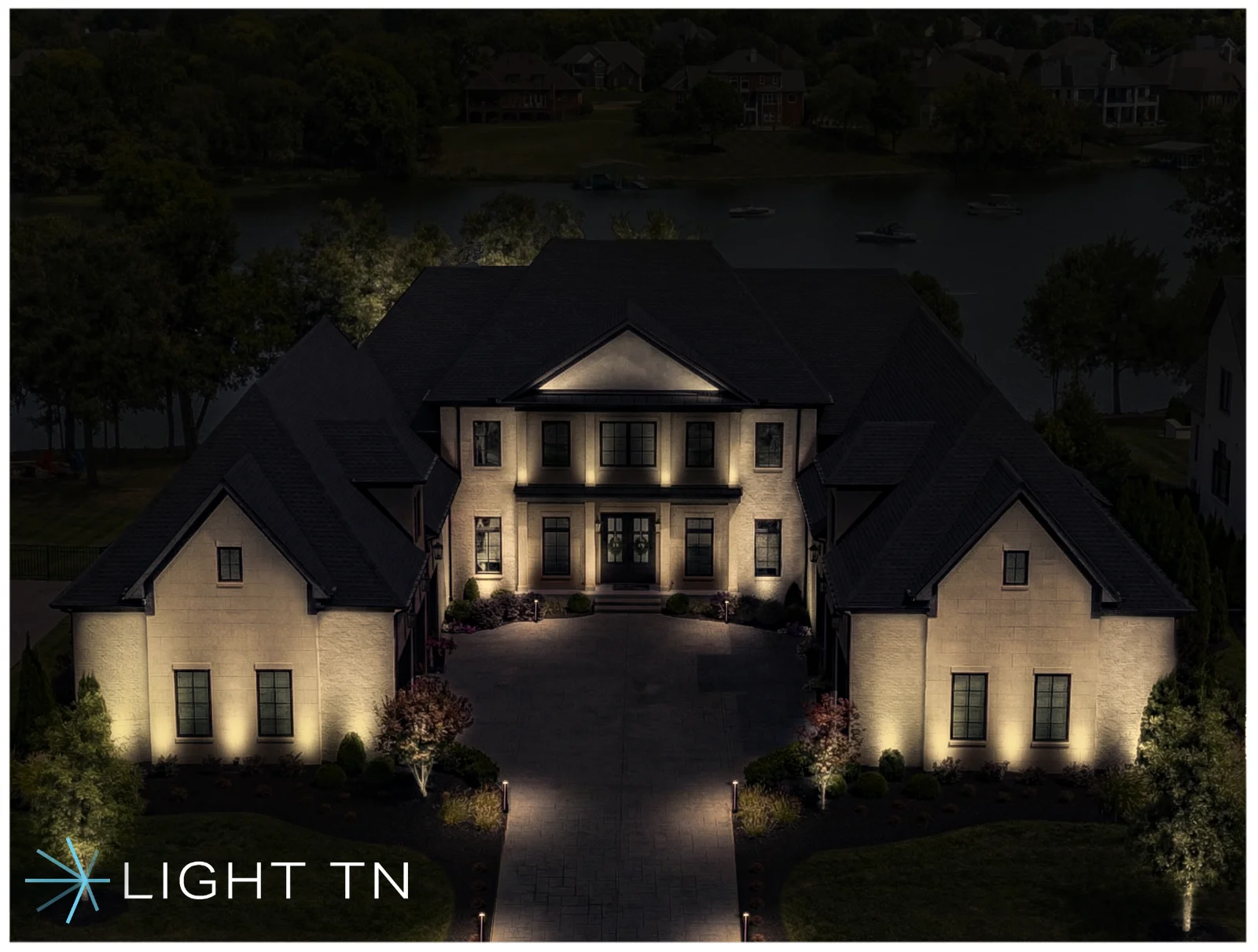
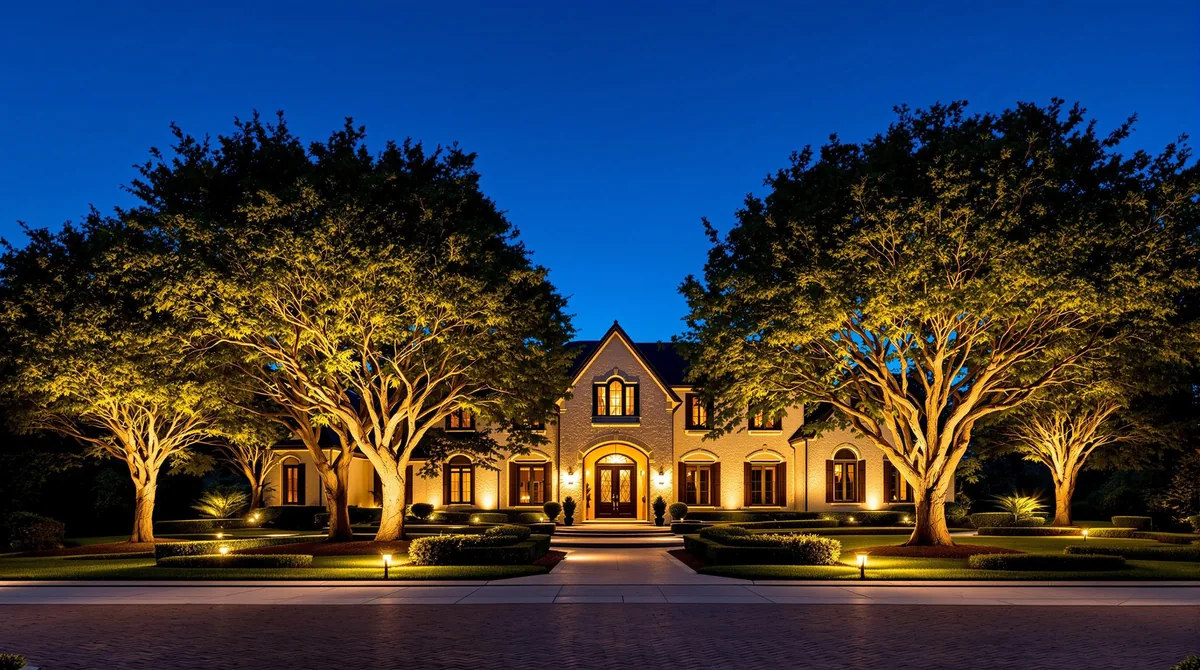
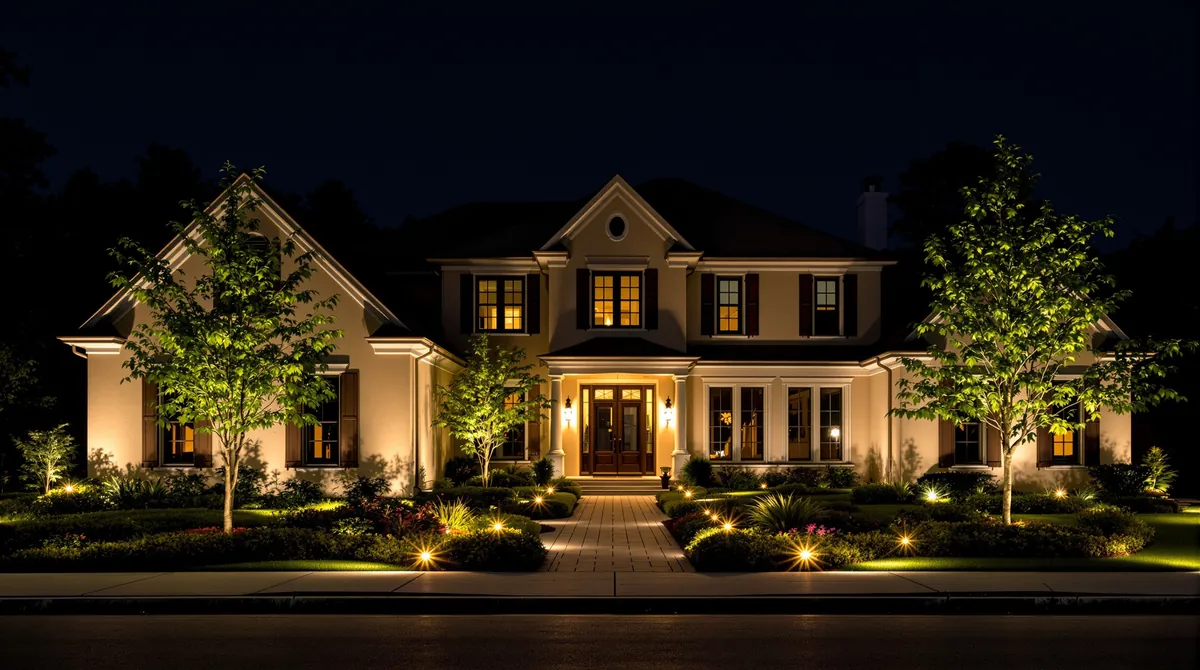
Safety and security lighting should make a property easier to understand after dark. It should reveal steps, turns, grade changes, entries, and edges without making the home feel like a parking lot.
For the broader system, see lighting design plan and Nashville landscape lighting.
01Safety starts with footing
Walkways, steps, driveway edges, retaining walls, and grade changes should be readable before someone reaches them. Low, shielded fixtures usually outperform high-output lights for this job.
02Security is about visibility
A balanced system removes hiding spots without creating glare. Facade lighting, tree lighting, path lighting, and entry lighting can work together so the property feels occupied and legible.
03Entries and transitions
Front doors, side doors, garage entries, gates, and patio doors need special attention because people pause, unlock, step down, and change direction there.
04Why glare makes security worse
Harsh glare can blind the person walking through the space and leave the surrounding yard darker by contrast. Shielding and aiming matter as much as output.
05Controls and schedules
Smart control can bring the system on at dusk, lower it later, and keep key arrival zones active overnight. This keeps the property consistent without wasting light.
06How Light TN plans it
Light TN designs safety and security lighting as part of the full property plan, so it protects movement while preserving the architecture and landscape.