


Light TN recommends comparing landscape lighting proposals against the same property brief, design deliverables, equipment, installation scope and written service terms. Homeowners in Nashville and Middle Tennessee should resolve missing scope before comparing totals, and confirm what is included, optional or excluded in the proposal for their property.
01How should you compare landscape lighting proposals?
A landscape lighting proposal is a written offer that connects a planned nighttime result to equipment, installation and commercial scope.
For a Nashville, Franklin, Brentwood or Belle Meade property, write a short brief before arranging consultations. List the places you want to use after sunset, the views you want to improve and the areas that should stay quiet or dark. A front approach, specimen tree, patio and side path may serve different purposes. Giving each designer the same brief makes the proposals easier to compare.
02What should the lighting design show?
A lighting design is a plan that connects the intended nighttime appearance to fixture specifications and lighting zones.
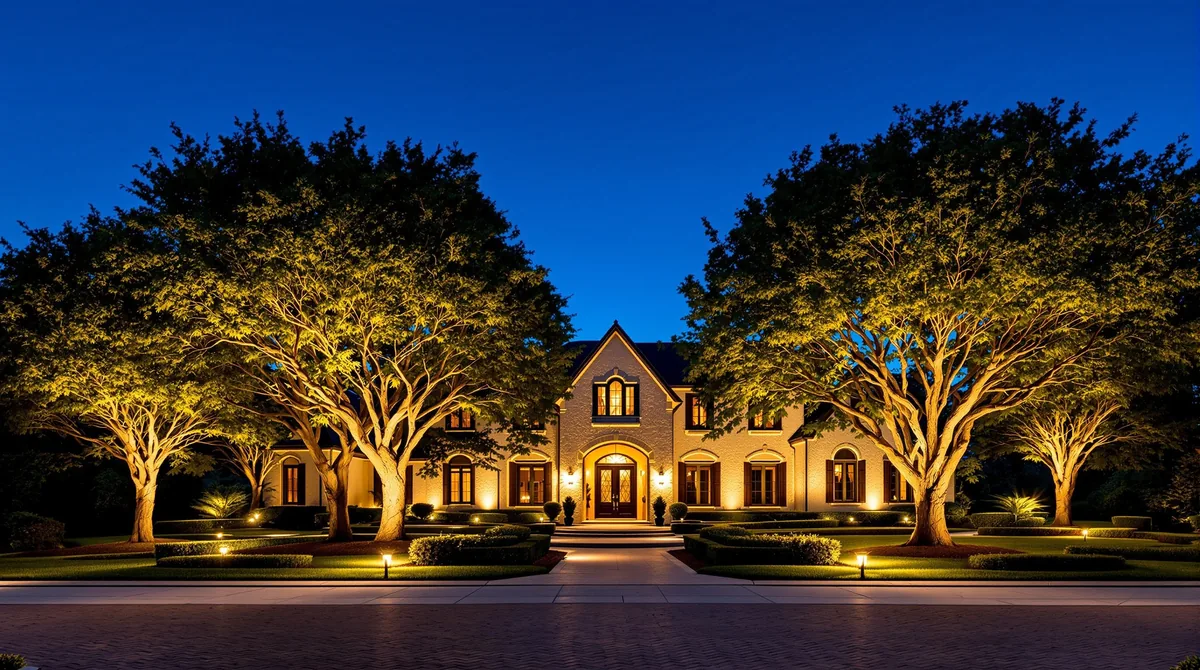
Ask the designer to explain the intended focal points from the street, the driveway, the house and the outdoor seating areas. The plan should help you understand why each lighting layer belongs there. Request examples with architecture and landscape features similar to yours, rather than relying only on a collection of attractive night photographs.
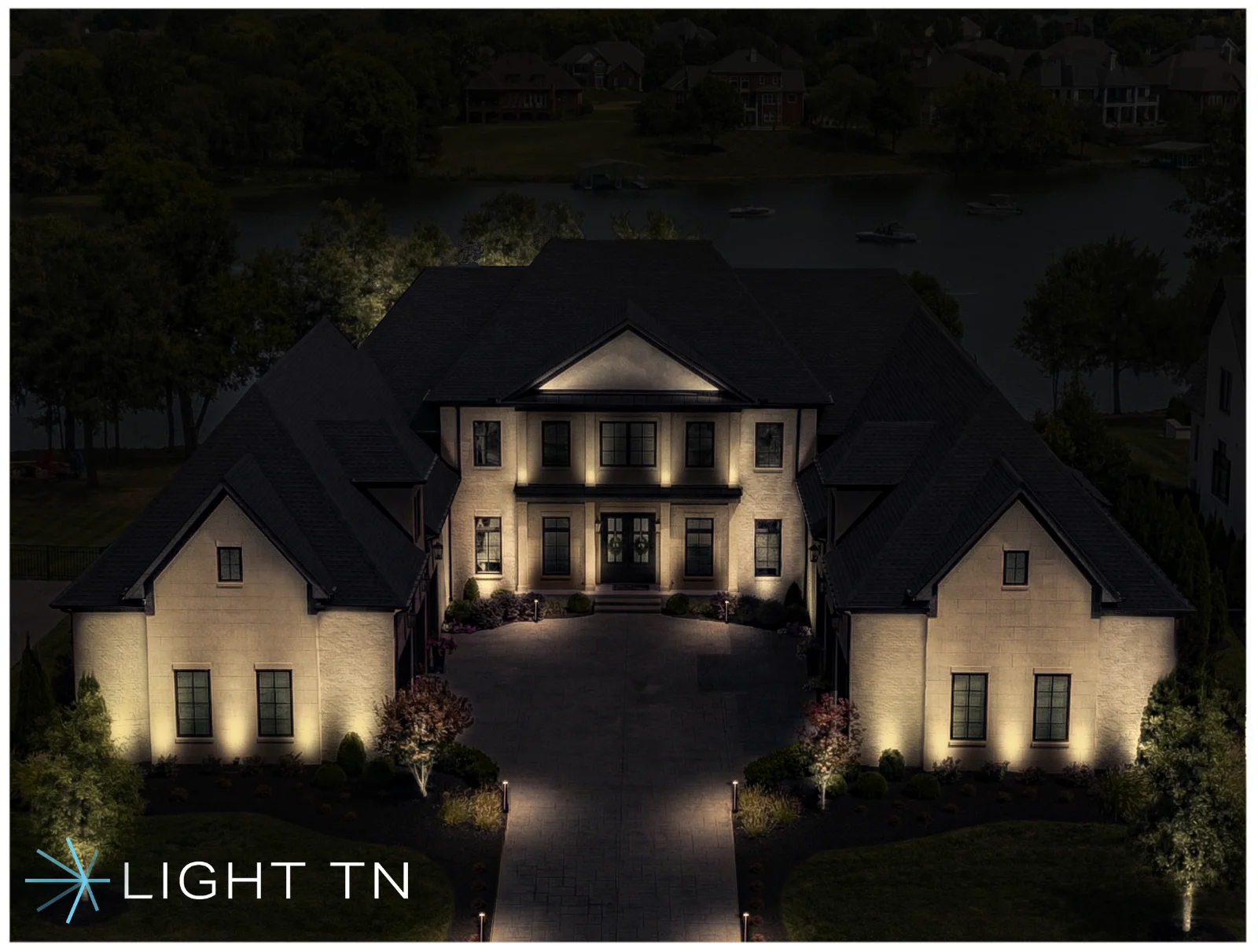
At Light TN, we begin with an on-site property assessment before specifying the design. We provide a night rendering, fixture specifications and zone layout so the design can be reviewed before installation. We offer design-only plans and credit the design fee toward the project when Light TN installs the system. A rendering represents the intended design and may differ from the final installation. Confirm revisions and handoff in the written proposal.
03What should the equipment allowance include?
The equipment allowance should identify the proposed fixtures, quantities, power equipment and controls.
Request a fixture schedule that identifies the proposed models, quantities and intended locations. Ask which fixtures will illuminate trees, paths, steps, walls and outdoor living areas. The purpose of this list is to understand the design and replacement requirements, not to choose the quote with the most products.
Have the provider explain the specified transformer, controls and any provision for later additions. If the proposal uses a system-level equipment allowance instead of an itemized list, ask what is included, what could change after the site assessment and how changes will be approved. Where materials or warranties affect your decision, compare the current manufacturer documents for the actual model proposed. A description such as 'professional grade' is not a substitute for a specification.
04What installation work belongs in the proposal?
The proposal should make cable routes, mounting, access, cleanup and after-dark adjustment visible.
Ask each provider to describe the work included on your property: cable routes, fixture mounting, access, coordination with existing irrigation or landscaping, cleanup and after-dark adjustment. Identify any hardscape or planting work happening at the same time. The written proposal should state who coordinates those dependencies and how a change in scope affects the quote.
Light TN publishes trenchless wire burial using an L2 Line Layer as part of its installation approach. Confirm whether that method is suitable for your site and what work still requires disturbance or another installation method. Avoid interpreting a method description as a guarantee that every lawn, bed or surface will remain untouched. Ask for the restoration and cleanup terms that apply to your project.
05How should you compare lighting controls?
Compare controls against the schedules, lighting zones and home systems your project actually needs.
Describe when you want the front of the property and the backyard to be lit. Ask whether those areas can operate on separate schedules or controls, and which app, timer or automation system the proposal specifies. Confirm the practical handoff: who sets the schedules, who explains the controls and how you obtain help if settings need to change.
Do not assume that the word 'smart' means every existing home-automation platform is supported. The correct comparison is between the systems specified for your property. Request written confirmation of compatibility where it matters, including any equipment, network requirements or ongoing costs.
06How do product warranties differ from service coverage?
Product warranties cover the stated manufacturer commitments; service and workmanship coverage need their own written terms.
Ask for the warranty documents covering the proposed fixtures and other equipment, then ask separately about labor, installation and ongoing maintenance. Record who handles a claim, which exclusions apply and whether visits or replacement work carry charges. A manufacturer warranty and a contractor's maintenance program answer different questions.
Plan for the landscape to change. Trees, shrubs and the way you use the property can affect where light belongs. Ask how adjustment, cleaning and repairs are handled after the initial installation, and whether they are included or quoted separately. Confirm a provider's current availability and service terms directly; an old review or an attractive portfolio does not establish what your proposal includes.
07How can you put different proposals on one comparison sheet?
Use one comparison sheet and retain unanswered items as questions rather than assumed inclusions.
Create one row for each criterion: design deliverables; fixture and equipment scope; zones and controls; installation and cleanup; nighttime aiming; written warranty terms; maintenance; phasing; and the complete project price. Mark each item as included, optional, excluded or still needing clarification. Keep unanswered items visible instead of treating silence as either a benefit or a defect.
A provider website can establish the services it describes. It does not establish comparative workmanship, current scheduling or the final price for your property. Use consultations and written proposals to resolve those questions.
If you are considering phases, request the complete design and a clearly identified first phase. Ask which decisions made now would help or limit later additions. Then compare the immediate quote with the work required to reach the final plan, rather than assuming separate phases will cost the same as one installation.
08How should you compare deposits and design fees?
Compare the written payment schedule and design-fee treatment for each actual proposal.
Light TN’s published terms, reviewed October 15, 2026, require a 15% deposit for projects over $10,000 and no deposit for projects under $10,000, with the balance due on completion. For an illustrative $12,000 proposal, that published percentage would calculate to $1,800. This is arithmetic, not an actual customer quote or a market price. The published rule does not resolve a project priced at exactly $10,000; ask for the payment schedule in the written proposal. Design-only fees are credited if Light TN performs the installation. Current published terms.
09What should you bring to a Light TN design consultation?
Bring photographs, desired nighttime uses, planned landscape work and unresolved scope questions to the consultation.
Before meeting a designer, gather a few daytime photographs, mark the areas you want to use at night and list any landscaping or construction work already planned. Include the questions that remain after comparing proposals. You do not need to choose fixture models before the property assessment.
Light TN offers an on-site design consultation for Middle Tennessee properties. Daryl Bentfield is identified on the studio's website as the designer who evaluates the property and develops the plan. Review the outdoor lighting design service, then book a consultation to discuss your property, design deliverables and quoted scope.
Book a design consultation to discuss the written scope for your property.
Use a proposal comparison worksheet
Record design deliverables, equipment, controls, installation, warranty and complete price for each proposal. Mark every item included, optional, excluded or unresolved. Ask each installer to price missing required work in writing.
| Criterion | Record for each proposal |
|---|---|
| Design | Rendering, layout, revisions and handoff |
| Equipment | Models, quantities, power and substitutions |
| Controls | Zones, schedules, compatibility and handoff |
| Installation | Cable route, access, cleanup and nighttime aiming |
| Warranty | Product and workmanship terms separately |
| Price | Complete scope, exclusions and change process |
- Give each designer the same property brief and desired nighttime uses.
- Record included, optional, excluded and unresolved scope separately.
- Ask for missing required work to be priced in writing.
- Compare the same complete scope, then review the design and service differences.
- Retain the final proposal and agreed change process before proceeding.
Coordinating lighting with other outdoor work? Read our guide to planning your landscape lighting installation before setting the installation sequence.