

Light TN designs a front yard as the arrival experience, and the most effective front yard lighting ideas begin with the architecture rather than the lawn. Restraint is the method: light the house and a feature or two, and let the rest go dark so the lit elements stand out.
For the whole-property view, see our outdoor lighting ideas guide, or our landscape lighting service. What follows is the order Light TN works in on a front yard, and why the restraint matters more than the fixture count.
01Start with the facade
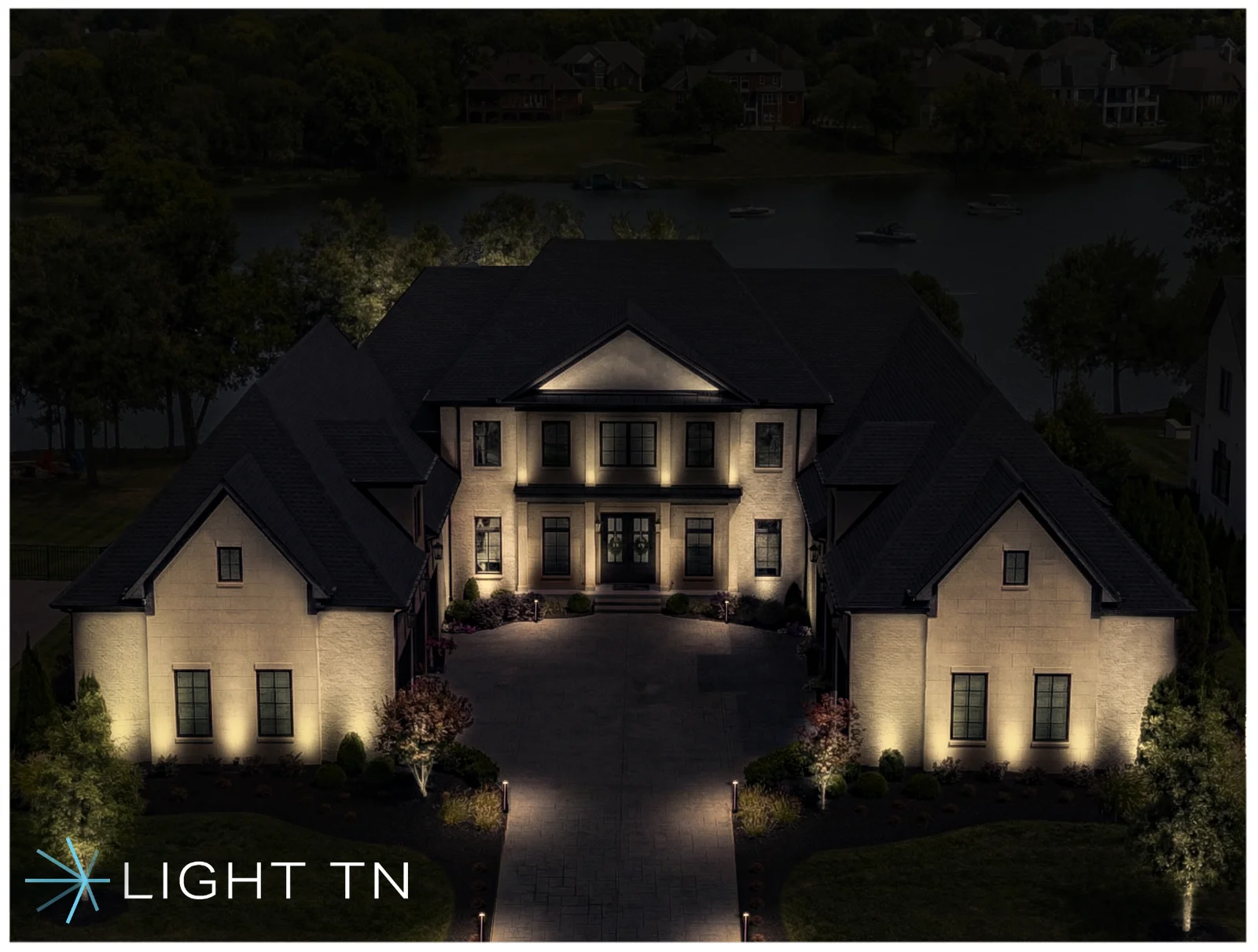
Light TN lights the house first. Grazing textured stone or brick brings out the relief; washing smooth painted walls lights them evenly. The facade is the anchor of a front yard, and getting its light and color temperature right does more for curb appeal than scattering path lights across the lawn. See our facade lighting guide for the technique, which decides whether the front of the house reads with depth or flattens into a single sheet of brightness.
02Light the entry and arrival
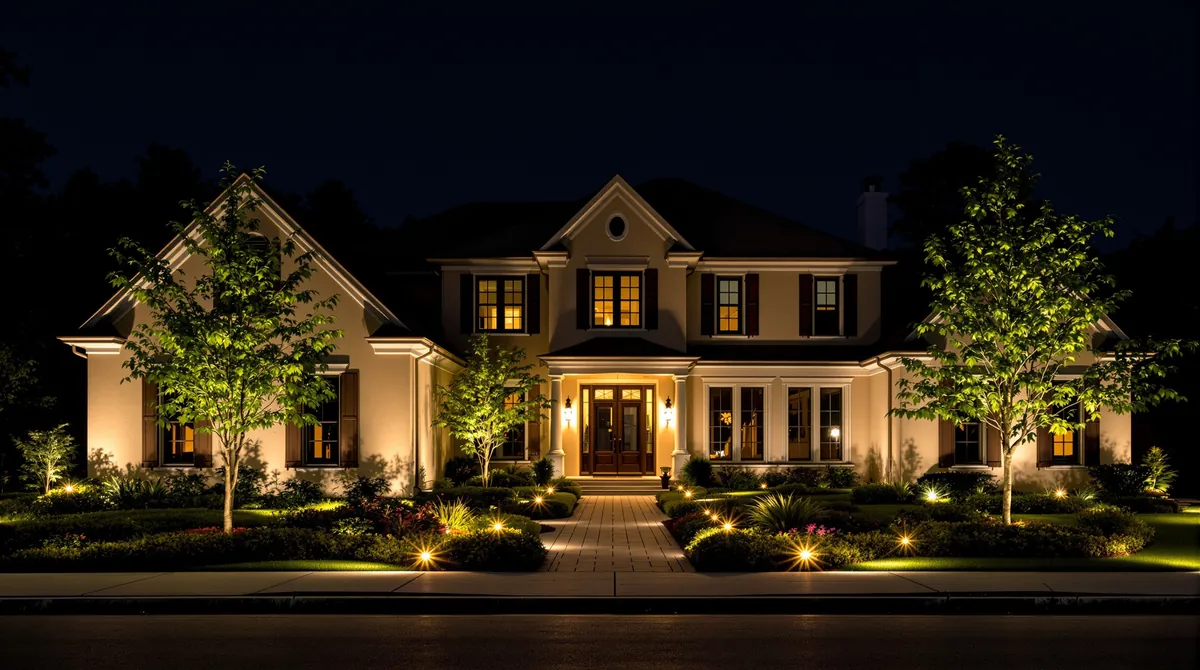
Light TN gives the entry a clear, welcoming pool of light — often downlighting from the eave or a soft wash on the door surround — so the front door reads as the destination. A lit entry orients a guest the moment they turn in, and it gives the front of the house a focal point. Once the facade is anchored, the entry is the second thing the eye should find on arrival.
03Add path light for guidance, not decoration
Light TN uses low, shielded path lights to guide movement to the door, spaced for overlapping pools rather than a row of evenly spaced fixtures. Path lighting is for guidance; it should support the facade and entry, not compete with them. A runway of bright bollards down the walk pulls attention away from the house — the opposite of what a front yard wants — so Light TN keeps the path lights quiet and let them do one job.
04Accent one or two features, then stop
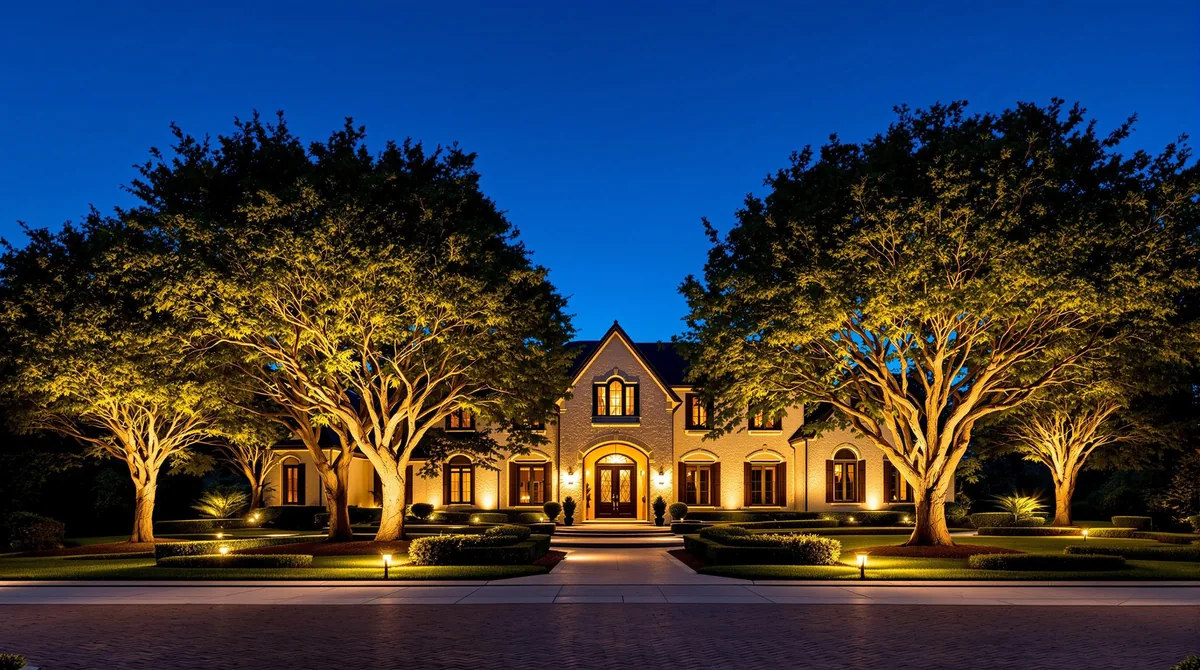
Light TN picks one or two front-yard features — a specimen tree, a low garden wall — to accent, and leaves the rest dark. Restraint is what gives a front yard depth; lighting everything flattens it. The lit elements need shadow around them to stand out, so the discipline is choosing what not to light as much as what to light. A single well-lit tree against a dark bed reads far better than a yard with a fixture on every shrub.
05Keep it warm and consistent
Light TN designs front yard lighting at warm 2700K and keeps one color temperature across the facade, path, and accents, so the arrival reads as one composition rather than a patchwork of different lights. Warm light flatters stone, brick, and foliage, and a single consistent temperature is what makes the separate layers — house, entry, path, plantings — look like they were designed together.
06Why restraint works on a front yard
A front yard reads best when the house leads and the rest supports it. Light TN has completed more than 500 projects across Middle Tennessee since 2020, and the front yards that still look right years later are the composed ones — facade anchored, entry welcoming, a path for guidance, a feature or two accented, and shadow left between them. Warm, consistent, and restrained does more for the nighttime arrival than a brightly and evenly lit yard ever can.