

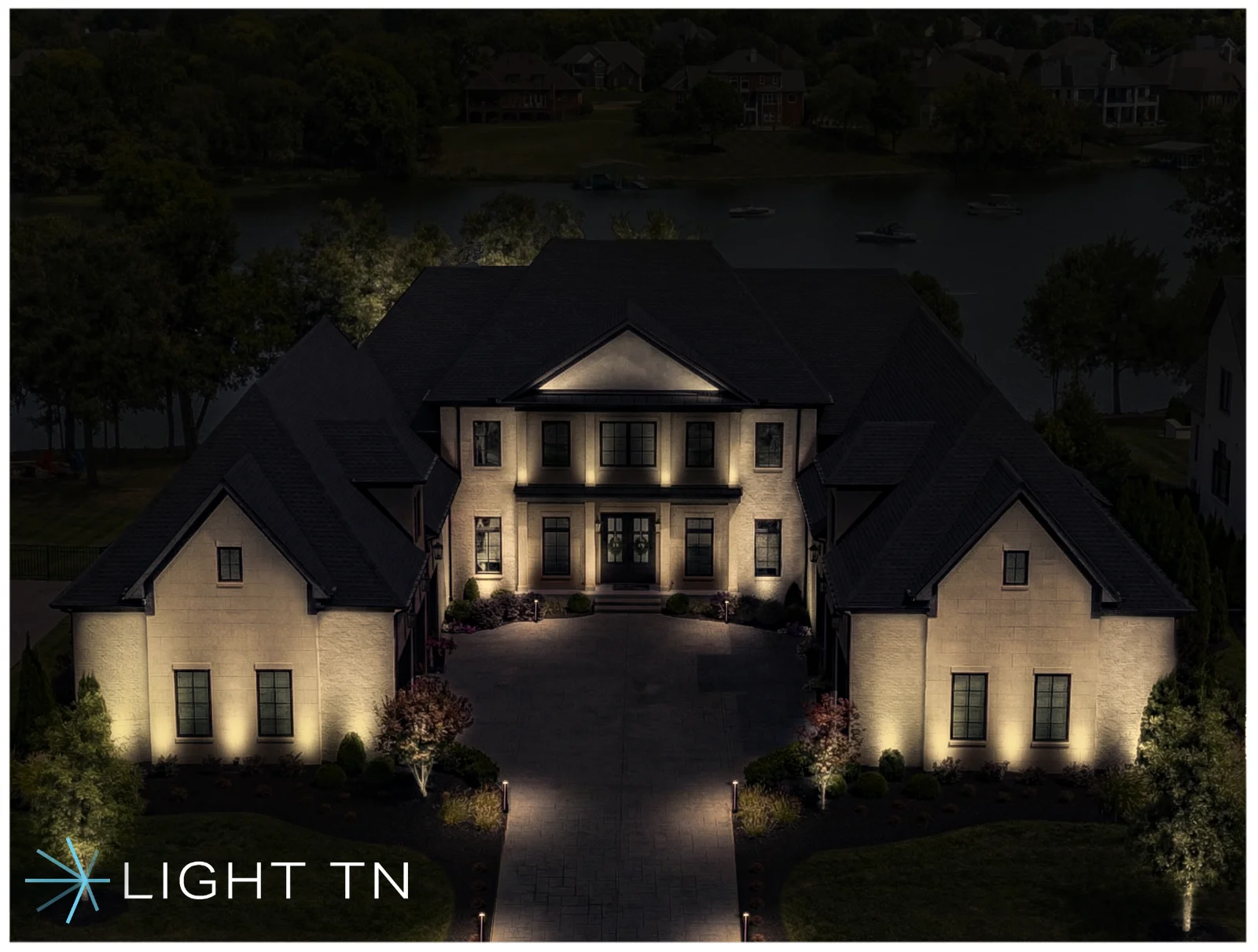
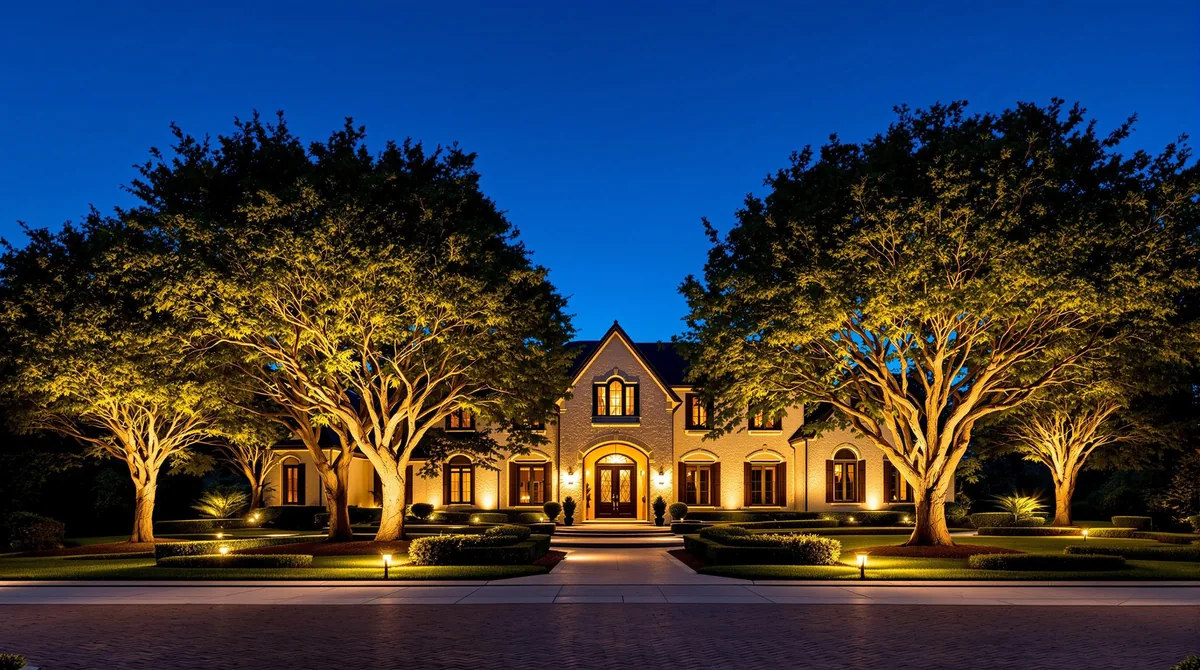
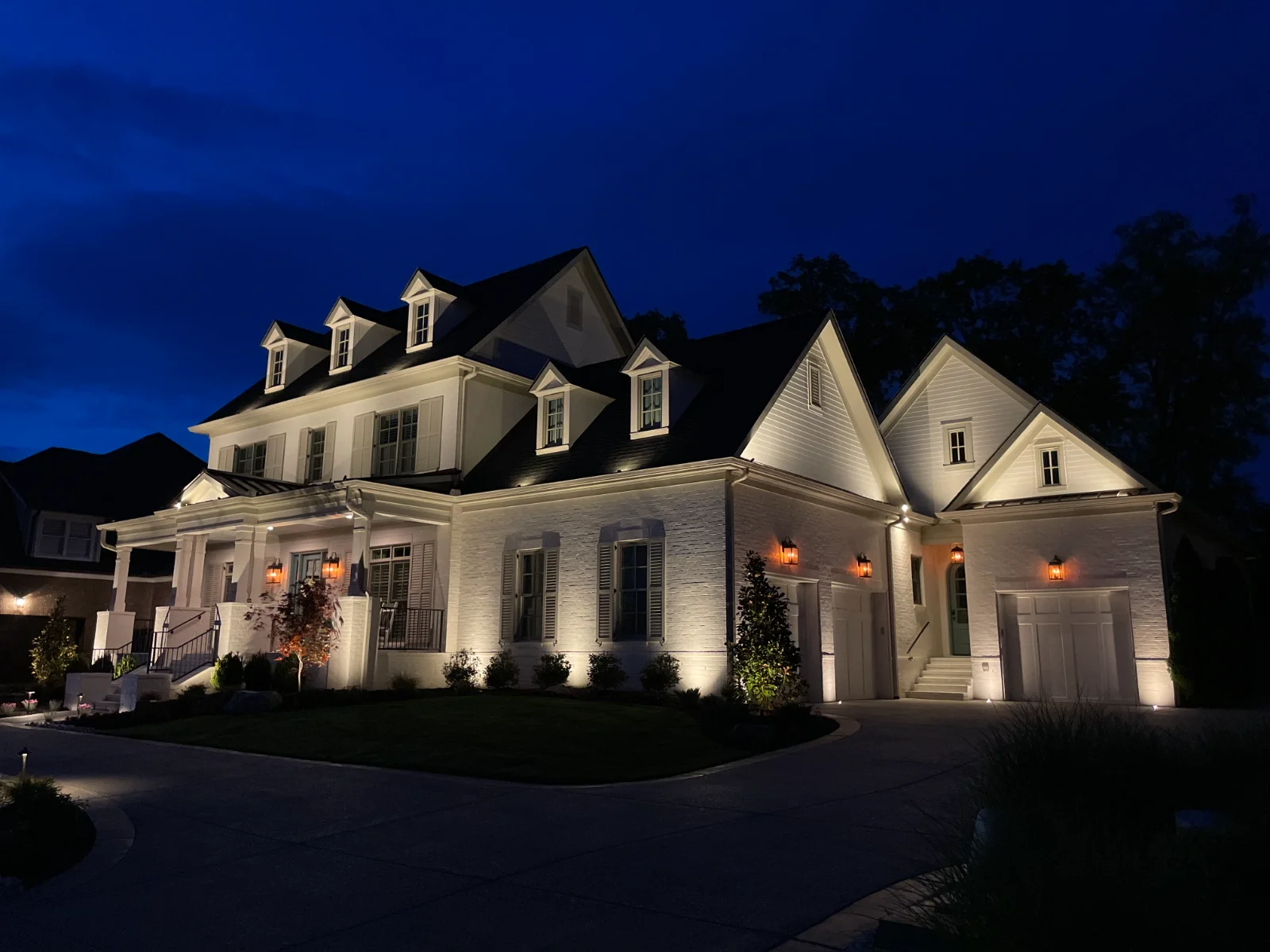
Light TN approaches facade lighting as a way to reveal a home’s architecture, not to flood it with brightness. Done well, exterior facade lighting brings forward the stonework, the columns, the rooflines, and the texture of a wall — the features a builder and architect intended you to see.
Done poorly, it flattens the whole front of the house into a wash of glare. The difference is technique, and most of it comes down to a few decisions made on site. For the full service, see our architectural lighting work.
01What facade lighting is
Facade lighting is the exterior lighting of a building’s face to express its architecture at night. Light TN treats it as the architectural layer of an outdoor lighting system — distinct from the landscape and path layers — because a facade has lines and materials that reward a specific approach. The goal is depth and dimension: bringing a column forward, letting a recess fall into shadow, and giving the eye somewhere to travel rather than one even sheet of light.
02Grazing vs. washing
The two core techniques are grazing and washing, and the material decides which one a wall wants. Grazing places a fixture close to the surface and aims the beam steeply up or down the face, raking across texture so stone, brick, or board-and-batten throws shadow and reveals its relief. Washing places the fixture farther out and lights the surface evenly, which suits smooth stucco or a flat painted wall where there is no texture to celebrate.
Light TN reads the material first, then chooses the technique — grazing a rough limestone facade, washing a smooth plaster one.
03Uplighting vs. downlighting on a facade
Uplighting and downlighting do different jobs on a facade. Uplighting from grade carries the eye up a column or a two-story stone face and is the workhorse of facade lighting. Downlighting — mounted under an eave or soffit — washes back down the wall and is often the more natural-feeling of the two, especially near entries and porches.
Light TN frequently uses both on the same elevation: uplights to express height and downlights to ground the entry, so the facade has dimension rather than a single direction of light.
04Color temperature and the material
Color temperature decides whether a facade looks warm or clinical. Light TN designs at 2700K because warm white brings out the mineral tones in stone and the depth in brick; a cooler source flattens them. On a stone facade, the difference is dramatic — a 2700K source brings the mineral tones forward while a 3000K source pushes them back and grays the surface. Light TN tests two or three temperatures on site before committing, because the material, not a catalog, sets the right answer.
05Shielding and glare control
A facade lit well shows no visible source. Light TN shields and aims every fixture so the light hits the wall, not your eye from the driveway or the street. Glare is the most common failure in exterior facade lighting: an unshielded uplight at the base of a column lights the column and blinds anyone approaching it. Careful placement, glare guards, and after-dark aiming keep the effect on the architecture and the equipment out of sight.
06Why facade lighting is worth doing right
A home’s facade is the first thing you see on arrival and the last thing a guest sees leaving. Light TN has completed more than 500 projects across Middle Tennessee since 2020, and the facades that still look right years later are the ones lit to the architecture — grazing where there’s texture, washing where there isn’t, warm where the material calls for it. Installed to licensed contractor CE-D: 76580 standards and aimed after dark, a facade lighting system completes the way the house presents itself at night.