

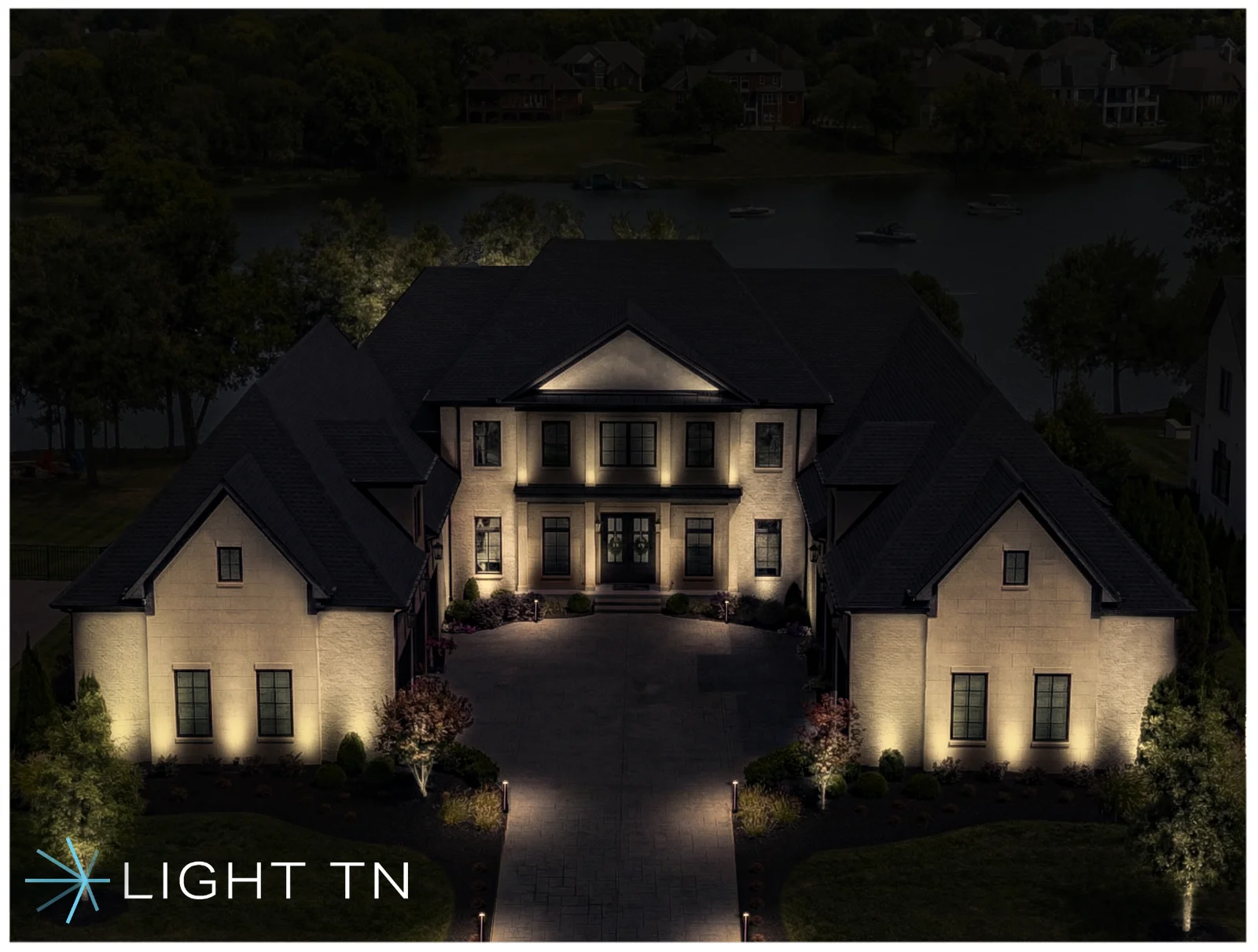
Light TN designs almost exclusively in LED, and the energy savings are no longer the interesting part of that decision. According to the U.S. Department of Energy, LEDs use roughly 75% less energy than incandescent sources and last many times longer — that much is settled.
What separates one LED landscape lighting system from another is everything the efficiency numbers don’t mention: color temperature, color rendering, and the quality of the driver behind each fixture. For the full picture, see our landscape lighting service.
01The efficiency case, briefly
LED landscape lighting draws a fraction of the power of the halogen systems it replaced. A full residential system typically runs for only a few dollars a month, and quality LED fixtures are rated for tens of thousands of hours — many at 50,000 hours or more. That means fewer bulb changes, less heat, and a system that holds its output for years rather than dimming over a season. Light TN treats this as the baseline, not the selling point.
02Why cheap LEDs disappoint
Not all LEDs are equal, and the gap shows up on the property, not the spec sheet. Inexpensive fixtures cut cost on the diode and the driver, and the result is light that reads cold, flickers subtly, or shifts color as fixtures age at different rates. Light TN specifies fixtures for the quality of their light and their driver electronics, because a 12-volt system is only as good as the components carrying the current. The difference between a designed LED system and a bargain one is visible the first night.
03Color temperature and CRI
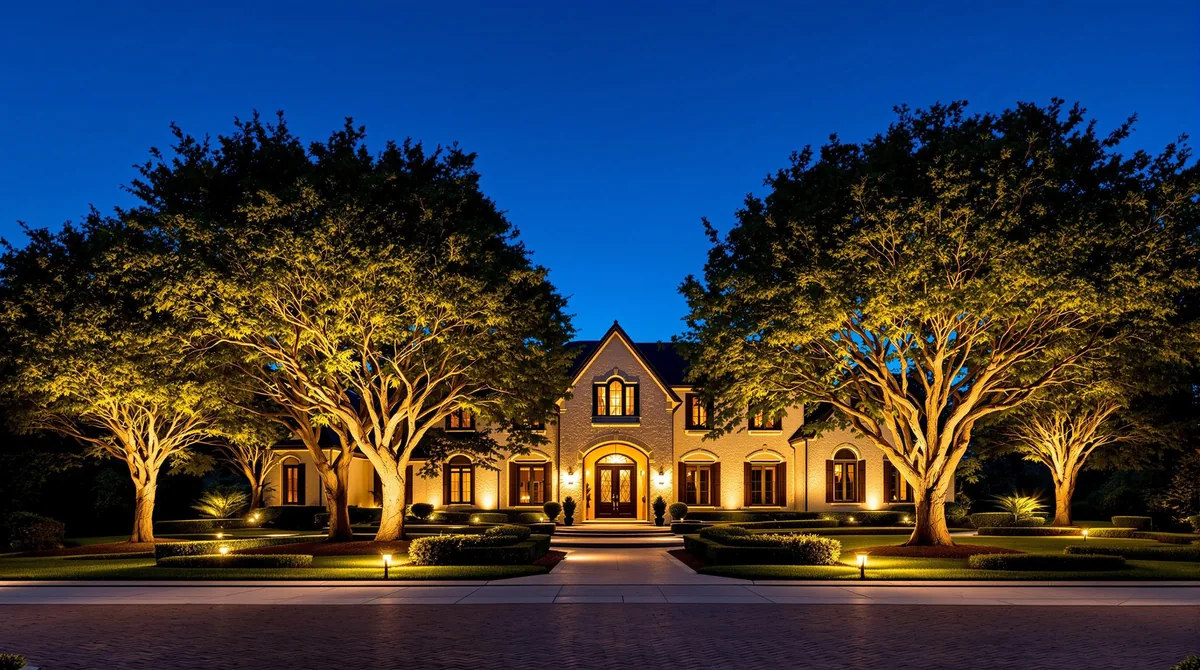
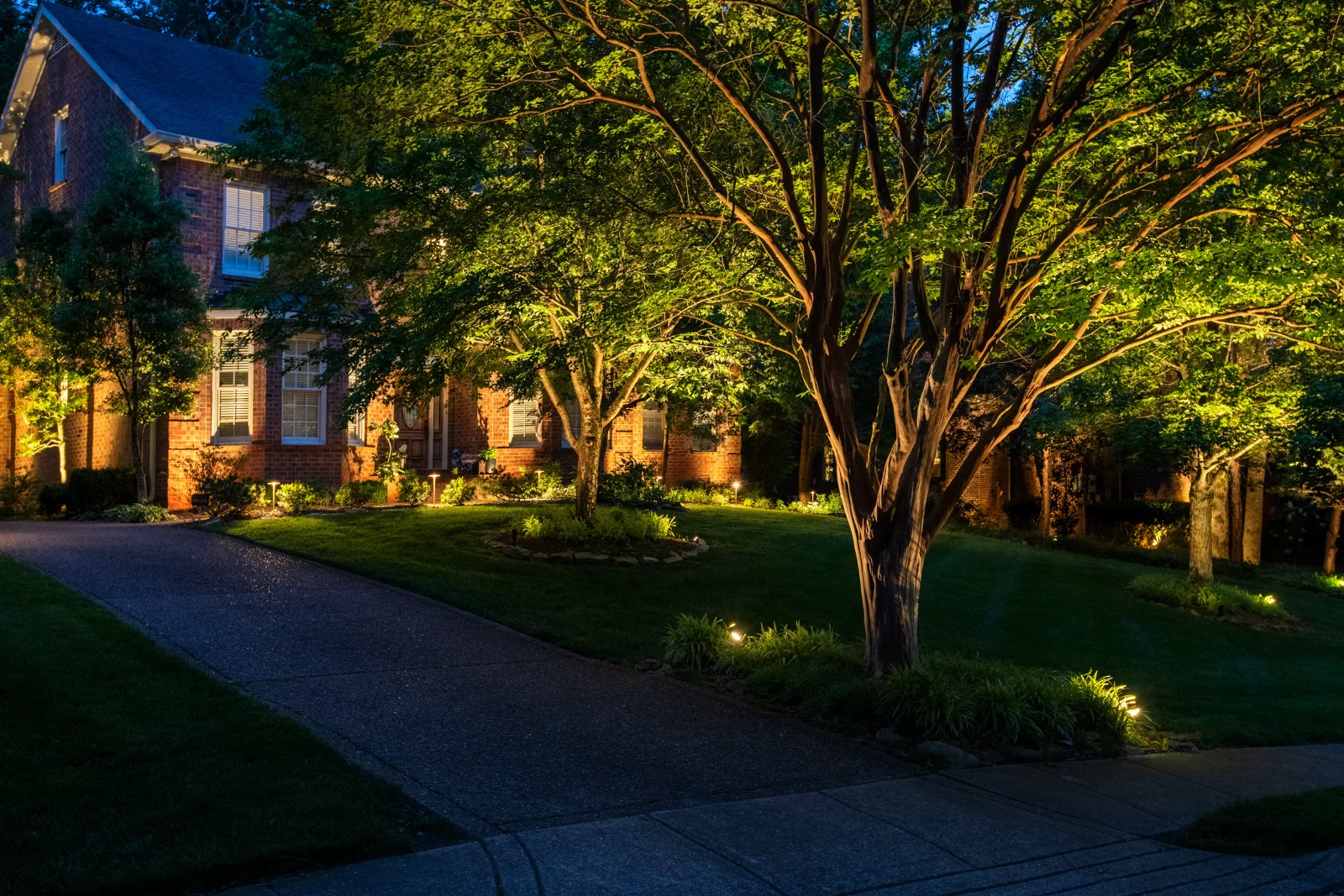
Color temperature is measured in kelvin, and color rendering index (CRI) describes how accurately a light reveals true color. Light TN designs at 2700K — a warm white that flatters stone, brick, and foliage — and specifies high-CRI fixtures so a red brick reads red and green leaves read green rather than gray.
A cheap LED with a low CRI can hit the same wattage and still make a beautiful facade look flat and lifeless. On a stone facade, we test two or three color temperatures on site before committing.
04Beam control and shielding
Efficiency means nothing if the light lands in the wrong place. LED optics give a designer precise control over beam spread, and Light TN uses that control to graze a wall, narrow a beam onto a tree trunk, or wash a wide hedge. Every source is shielded below your sightline so you see the effect and never the fixture. That discipline — not raw lumens — is what makes an LED system feel composed rather than bright.
05Are LED landscape lights worth it?
For a property worth lighting well, LED is the only system Light TN recommends. The energy savings pay back over time, but the real return is in performance: consistent color, years of reliable output, and a fixture failure rate Light TN tracks at under 1% a year. Paired with smart control, an LED system can come up warm at dusk on its own and hold one design across the property. It is efficient because it is LED; it is worth it because it is designed.